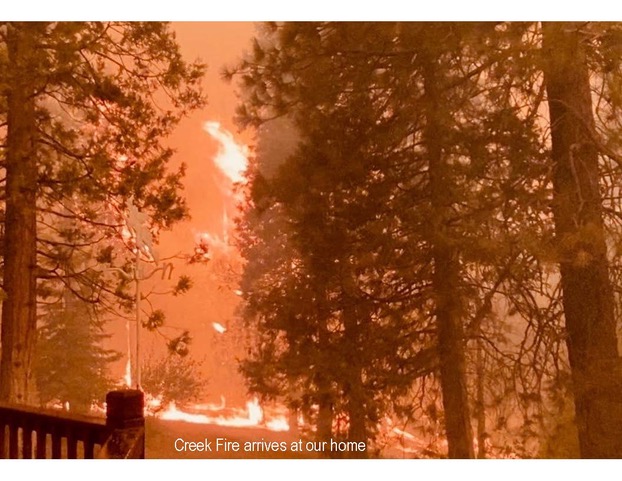
It was September 4, 2020, and we were up for the weekend. In the early morning of Saturday September 5, we woke up to the sound of sirens. It was one of those times when you tried to go back to sleep but the sound of the sirens kept coming, so we got up. I went to the sliding glass door in our bedroom and looked down but could not see anything but could smell smoke and was concerned. It was about 5:00 am.
My husband Bobby and I went out front to see if we could see anything and when our motion detector light came on, we could already see that there was ash on the car. We were concerned that it was either a big fire or close.
Bobby decided he would go down towards town to see what he could find out, so I did not awaken my other family members at that time. I was waiting to hear from him. It seemed like forever that he was gone, but it was only minutes when he called. I could just hear a sense of urgency and a sadness in his voice. He said we need to get everybody up and to get out; there is a huge fire at Big Creek. I started waking everybody up and the only thing I could think of was I need to run down the road to notify my neighbors and friends.
That is what I did. I grabbed my purse as second nature and ran down the road in pajamas with my purse hanging on my arm. I had to tell the neighbors that there was a fire. I talked to them and told them what was going on. I let them know that we were leaving and hoped they would too.
Bobby pulled into our driveway and when I realized I had my pajamas on, I changed to my clothes. We and other family members packed up just our bags and a few items. We left all the food. We thought, let us just get out of here, and get on the road. We do not want to be in the way. When they put the fire out, we will come back tonight or tomorrow as we had just started our holiday weekend.
We were headed down the hill and we were just a couple of miles down the road when I thought I am going to call my son. He works for Edison, and he knew we were at Shaver, so I just wanted to let him know that we were OK. I told him we are coming down the hill and do not worry. He said, well you are coming down, but they are sending me up to the fire. Then my stomach just flipped. Again, thinking we are letting him know that we are OK and he was headed up to the fire to work at Big Creek. None of us would have imagined that this fire would have grown like it did. He was up there from September 5, through December 18, working for Edison.
It would be weeks before we could return to our cabin. It was a grueling two or three weeks of this gut-wrenching feeling. Were we going to lose our cabin? What was happening around us? What is going to happen to our friend’s cabins or homes? This was scary.
Our cabin in Ockenden survived while so many cabins in other areas did not. It is a grateful but heavy-hearted feeling at the same time. We cannot say enough about all the first responders who worked so hard, those who followed for clean-up, and those who are still working hard to support and care for those who have lost so much.
We brought relatives up for the weekend of Friday, September 4, 2020, and during the night we started hearing sirens. At 5:00 o’clock in the morning on Saturday September 5, I drove down to the Pub ‘N Grub in town where some people were congregating at the gas station. A man had his phone and showed me pictures of fire at Big Creek. Lots of cars were coming down the hill at a rapid pace. That was a lot for 5:30 in the morning. I decided to drive home to Ockenden and start calling people in the neighborhood and get my family out.
I thought I needed to just get home because it emotionally bothered me, since I had family up for the weekend. I called my wife Deana and said, “get everybody up; we are leaving.” There is a fire in Big Creek. At that point she ran down the street to tell all the neighbors that she could, and we called others. We packed up our stuff and left everything in the refrigerator because we figured we were coming back later that night. The smoke was getting bad already.
My son Gerad works for the Edison company and was going up the hill to work as a response to the fire at Big Creek as we were driving down. We had no idea at that time we were leaving a disaster and he was going into it. We felt proud but we also felt that our son was just going into what possibly could be a life changing ordeal, which it was.
We got down to the Shell station in Prather and people were loading up their boats to go skiing at Shaver Lake. They had no idea about the fire. I told them you might want to rethink that, make some phone calls, turn around and go home as the lake is covered in smoke.
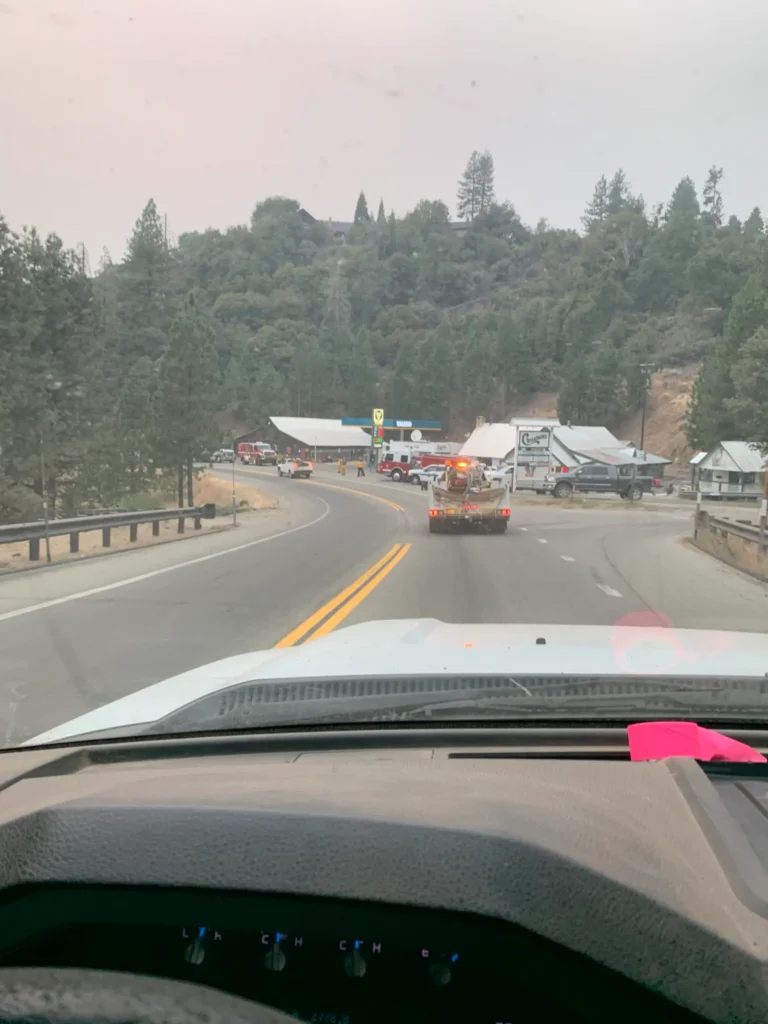
We passed many fire vehicles with flashing lights and fire trucks coming up as we were going down the hill.
We had no idea that this fire would spread like it did. Some of the people were in disbelief, some of the people didn’t think it would ever turn out to be this way. In retrospect, we are glad we left immediately, it was better to get out of the emergency vehicles way and get the family out of danger.
We really thought we would come back that same night once the fire was put out because we left a refrigerator full of food and had just started our weekend. We found out refrigerators can be refilled.
We had a lot of great people that kept us informed and everybody got closer knit because of it. I would it call a sense of community or something. It was a real community effort to keep everybody informed with pictures and updates and families helping families was neat. I guess my final thought was there’s a lot of little people that did a lot of big things and they go unnoticed. But they haven’t gone unnoticed because we all know, it was a community effort.
I was serving as a Fire Patrol for Southern California Edison Forestry on September 4, 2020, at approximately 1822 hours, I heard the report of the Creek Fire came over the radio. I carry a radio to monitor other agencies such as Cal Fire, U.S. Forest Service, etc. The dispatch I heard placed it near Big Creek, and I responded due to the potential threat and/or damage to SCE property. While in route I was told the fire was below Big Creek and inaccessible. I had another incident being reported, and I canceled my response to the Creek Fire and responded to the new incident. I continued to monitor, but was really busy and was not able to hear everything that was said. I ended my shift and felt confident thefire would be contained during the night.
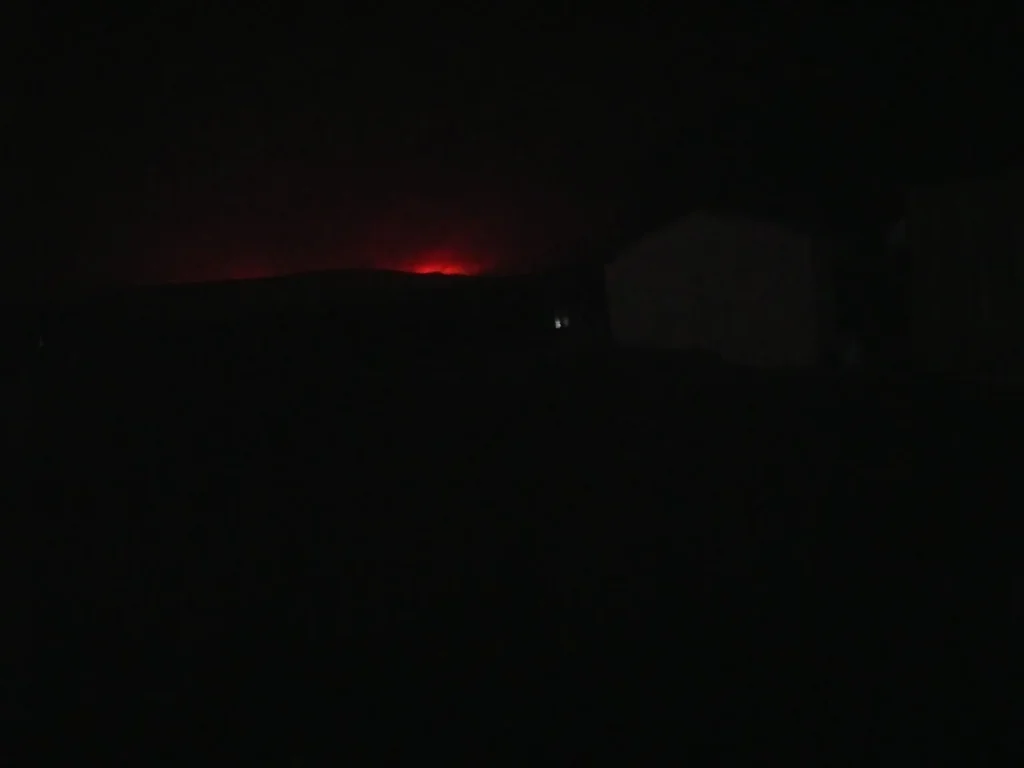
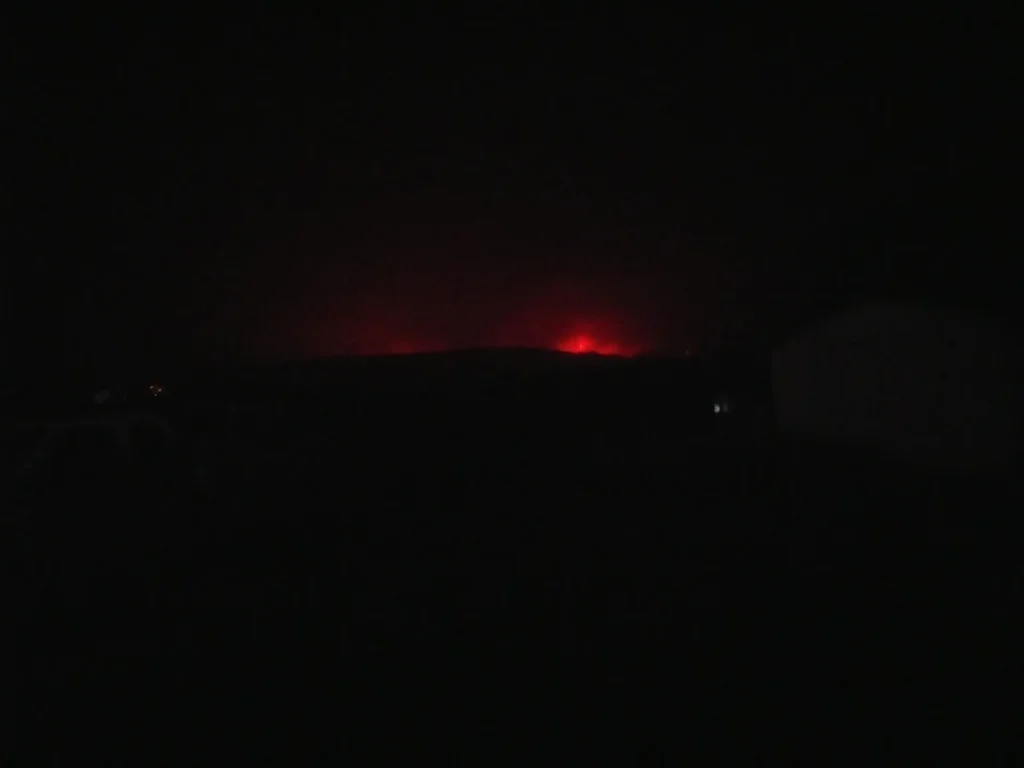
On Saturday morning September 5, I woke up at 0400. I could smell smoke and I looked out the door and saw ashes falling. I knew that they had not caught the fire during the night. I started getting dressed and I received a text from my supervisor, Ryan Stewart, advising me to get ready for work and instructions would follow. Ryan met me at my patrol truck and told me the fire was not controlled and they were working on getting a dozer line around Shaver. He told me to patrol Camp Edison for spot fires and to tie in with Camp Edison staff when they arrived, and provide assistance as needed/requested. I did a quick patrol of the campground and did not see any problems. I went down the boat ramp in the day use area and met with several other employees, hosts, and a few campers. It was still dark and we could see a glow in the gap looking towards Shaver Hill. Around daylight Nick Terrio, another Edison Forestry fire patrol, arrived. After meeting with Camp staff, it was decided to close the campground and move all of the camp and forestry vehicles that weren’t being used to the large parking lot in day use for protection from the fire. Chuck Berner was unable to arrive until later due to car problems on the way over. When Steve Byrd, manager over Camp Edison and Forestry arrived he asked about the campground. I told him it had been patrolled and no problems were seen. The decision was made to advise campers of the potential, and allow them to evacuate if they so desired.
Ryan called and asked us to open all the gates on Southern California Edison property. That was done as quickly as possible. Nick and I divided up the areas to cover. Edison has 20,000 acres around Shaver Lake and there are many gates to open. Fire crews and equipment were moving about and access through gates needed to be available when needed. I was asked to go to the Balsam Forebay area and see if I could get a look at the fire coming up towards Ely Mountain and Balsam Forebay. I drove out the Upper 72 Road, which turns off Highway 168 near Balsam parking lot. Upper 72 Road is high on the mountain and provides many places to look over the area. As I was driving out the road I could see the fire burning near Aspen Meadow below the forebay. It did not have a rapid rate of spread even though it was crowning. I was not aware of the exact location of the point of origin and was not sure if there was fire below me. It began to get smoky and I was getting nervous that there might be fire below me. There was no place to turn around. I continued and eventually found a spot wide enough to turn around. I was glad to get back to an area that I felt safer. I talked to some of the local logging companies that were moving their equipment to a safe area.By now all of the Edison Forestry fire staff was on duty and we divided up the areas where we needed to patrol. I drove back to Shaver Lake and out the Perimeter Road and up the Section 16 Road, which runs from Perimeter Road just above the Eastwood Powerhouse on the North East side of Shaver Lake. The fire was not very active in that area as it had already burned through. The fire was still north of the Perimeter Road and we didn’t want it to cross the road. No action needed to be taken in this area. Later that morning I tied in with Nick and we checked out an area burning from North Fork of Stevenson Creek Bridge along and on the North side of the Perimeter Road. It was creeping around in an area that hadbeen previously had the brush piled. This was a treatment area to reduce the fuel loading in the event of a fire, such as this. Cal Fire sent crews and equipment to cut off the fire where it was needed. That action kept it from burning down to the lake and causing more damage.
Sunday morning we held a quick briefing and decided where to patrol. I was working mostly around Shaver, Balsam and along Highway 168. I watched the fire burn around Musick Mountain. I thought all of the communication towers and equipment would be burned up. Retardant was dropped heavily on top to divert a communication disaster. All facilities, as I found out later, including the Musick fire lookout tower escaped with little or no damage. The only casualty was the old wooden outhouse, and it wasn’t safe anyway. About noon the fire came rolling off Stevenson Mountain. Everyone except fire personnel had to evacuate from Shaver Lake. The fire crews were burning out in front of the fire and the smoke was lying low to the ground.
We, Camp Edison and Forestry personnel, were told we had to leave. I was hesitant to leave, I had been taught to run to the fire not away from it. But I was no longer a Forest Service fire professional and must follow orders. I had to make a decision on whether or not to take my travel trailer home or to leave it. I decided to take it home. Securing the inside and disconnecting everything and hooking up to my truck, is quite time consuming. I had several offers of help, but due to the increase of fire activity in all areas, the same people offering to help needed to go to their own homes and protect them. Along with everything going on, I started receiving text messages, offers to help, checks on my welfare, the status of my travel trailer, and even the status of the fire. It is hard to get hooked up to the trailer while reading and responding to text messages. I finally got hooked up to the trailer and loaded all I could in the truck. It was really getting dark with smoke and the ashes were raining down. I was keeping a watch for spot fires. I could tell the fire and burnout were getting closer, but I wasn’t concerned. I determined that I had an escape route and safety zone. Finally I was ready to leave and pulled up to Highway 168 and turned my left turn signal on. I looked to my right and I could see the fire roaring, the flames were about 50 to 100 feet high or higher and it was moving my direction. The flame front was somewhere between me and the entrance at Camp Edison. I wanted to turn and go look at it. From where I was looking, I was sure they needed my help. Better sense prevailed and I didn’t think towing a travel trailer into the fire area was such a good idea. I thought I had better sit this one out, I headed west to Prather. Some said I had fire chasing me down Highway 168, but it wasn’t that close. At least I didn’t think so. I didn’t seen anyone but fire personnel while I traveling down Highway 168. I believe that I was the last one off the hill.
I was home for a couple of days and Ryan called and asked me to meet him at the briefing at Sierra High School. I believe it was Wednesday the 9th. We listened to the briefing and then Ryan, Nick, Chuck and I met for our own briefing and decided what areas we would patrol and if any of us needed help one of us would go and assist. I checked the roads along Huntington Lake Rd (AKA Big Creek Road). I drove up Snake Pit Road and checked it. The fire had burned the upper part and had a dozer line that was holding. We had burned that area for the last 2 winters and it had done a good job stopping the fire. I drove up Upper Ely Mountain Road and found a 2 acre spot fire in a draw on a switch back on the road where the Snake Pit trail leaves the main road. It was more than I could handle so I notified Ryan and he notified the Cal Fire contact. I continued on towards Balsam Forebay. I monitored part of the fire that was burning near the power line road that runs from the Upper Ely Mountain Road to just above Highway 168. It was a backing fire and I was hoping the road would keep it east of Ely Mountain. The road ended on a ledge above Highway 168 and had a large amount of fuel loading on the ground which would allow the fire to burn through and start burning to the top of Ely Mountain. Much of this area would be steep with heavy fuels. I would report this at our next briefing; it was not an immediate need.
The next day I was told to meet with a dozer strike team (2 dozers with a strike team leader). They unloaded their dozers at the Shaver Heliport on Shaver Hill and walked the dozers to the site where the spot fire was yesterday. The spot fire was now about 10 acres with a slow rate of spread. I worked with the strike team leader and we decided where to put in containment lines, along with a contingency line. The ground in this area was very steep, but the dozers were large and did good work. I patrolled a side road where the fire was burning below the road and was low intensity, due to a prescribed burn 2 years ago. I felt as long as it stayed below the road no attention would be required. I would continue to monitor this road also. I went back later and the dozers were done. They were moved to the power line road and put a line from the end of the road to Highway 168 to cut off the continuous fuel I had mentioned earlier. Later that day I mentioned to Ryan that we needed a secondary line between the power line road and Ely Mountain. He told me he would try to get a dozer the next day and I could show them what I wanted done.
He was unable to get a dozer from the fire and asked Huntington Construction for a dozer. I met up with Stan, his dozer had been dropped off at the parking lot at Balsam Forebay and I told him where I wanted him to work. I went ahead of Stan and was trying to flag where I thought the old road was. I started down an old trail thinking I was on the old road. I soon found that we would not be able to cross the creek the way I was going. I started back to where I had parked my truck. There was an old landing and Stan had cleared it for a turnaround and small safety zone. Fortunately, Stan had not tried to follow my flagging and continued opening the road. He knew where the old road was, I didn’t. I followed him down to the end and he opened a turnaround spot, and continued the line to tie into the line from the power line road. I later talked to Stan when I gave him a ride back to his truck, and mentioned that I was glad he knew where the road was. He told me he knew because he had worked on the logging sale many years ago. Stan gave us a good road, which was a big need when the fire did cross the power line road. We had several crews and engines working the area to hold the fire from going up Ely Mountain. Without the road Stan made access to, Ely Mountain might have burned. I also had Stan open a secondary line from Snake Pit trail to the top of Snake Pit Road. I explained what I wanted, and he told me he was the one who had put the line in 2 years ago. Stan did a great job for us. His skill as an operator and knowledge of the area was invaluable. Thanks Stan.The next few weeks were all a blur, a few flare ups on Southern California Edison property. We mopped up areas that were still hot along the fire lines and could cause problems later. Many of the fire crews had been moved to other areas of the fire that were not contained. The Edison Forestry fire patrols continued until moisture removed all threat of fire on Edison Property. Ryan provided guidance and kept us encouraged and Steve made sure we and our families were doing ok. Their leadership helped us do what we needed to do to protect Edison property.
Leading up to the Creek Fire, the County of Fresno was concerned with the density and significant number of dead trees in Eastern Fresno county. In 2015, the Rim Fire burned over 150,000 acres near Hume Lake and the sense of urgency to thin the Forest was ever present. By 2019 there were over 25 million dead trees in Fresno County alone.
On the evening of September 4th 2020, a fire was detected outside Camp Sierra and fire resources were dispatched. A few hours later this small fire grew forcing the evacuation of the camp and the community of Big Creek. The morning of September 5th, concerned residents began calling my cell phone wanting to know what was happening with the fire. I was able to provide information using Facebook Live videos so residents and concerned citizens could receive accurate and up to date reports.
Because the fire had started on the Friday leading into Labor Day weekend, many news stations lacked adequate reporters to disseminate information that was “real time”. I decided to use the resources of my office to provide accurate and up to date information to those seeking information on the Creek Fire. The fire was growing so rapidly that it required 6-8 live updates daily.
There was so much misinformation in the first 10 days, that, I was compelled to drive in areas where the fire was burning or it has passed through to show residents which properties had survived and which areas were destroyed by the fire.
On one occasion I received messages that the town of Shaver had been destroyed. I drove through Shaver, live, to show that not only did the town survive, but most of the residential properties did too.
A few days later I was with the Chief Mark Johnson of Cal Fire and were driving down Auberry Road. The fire had ravaged many of the residences just a few hours before our arrival that day. We stopped in front of one home while Facebook live was in progress. The house miraculously survived, however, there were several small fires actively burning around the home. After the fires around the home were extinguished, I immediately received a phone call from the homeowner. Just 2 hours before their call to me, they were told by others that their home was lost in the fire. They were totally surprised to learn that I was at their home and it had survived.
For 3 1/2 months, my office provided regular updates not only on the fire but also on how the community was coming together to help rebuild.
While the Creek Fire is the largest single disaster in the county’s history it also stands as one of the greatest periods of generosity where neighbors, churches, cities, and states provided money, housing, police, firefighters and food to those in need.
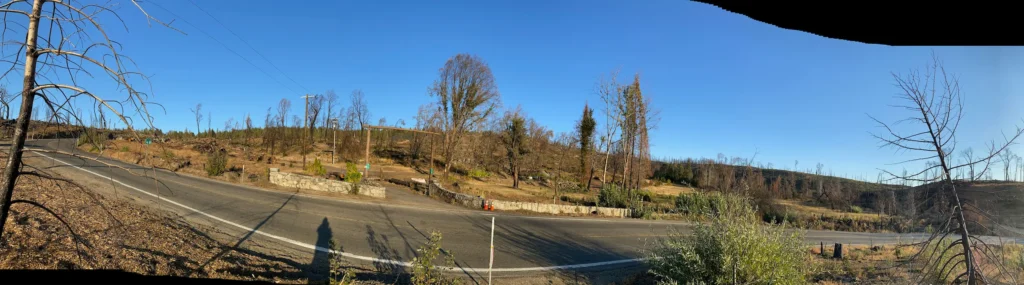
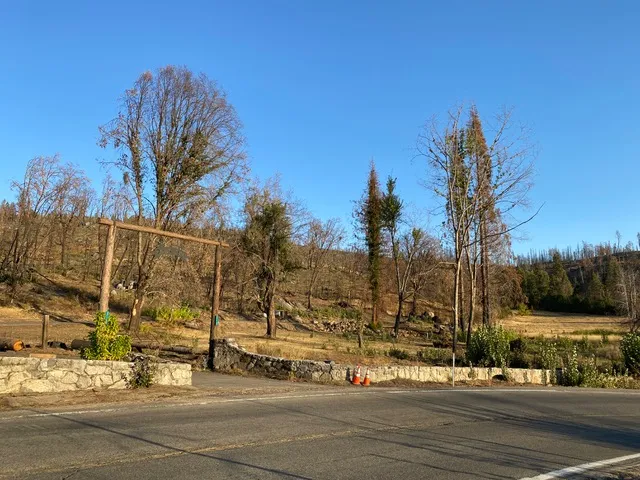
The Shaver Ranch on Pine Ridge has been in the Shaver family for 100 years and was left in ashes by the Creek Fire one year ago. It is difficult to recognize.
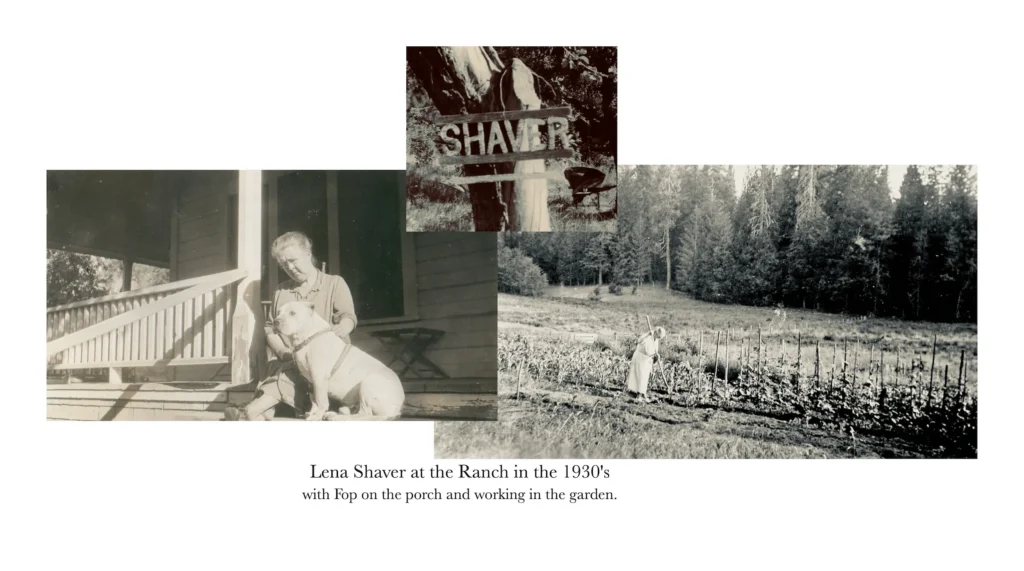
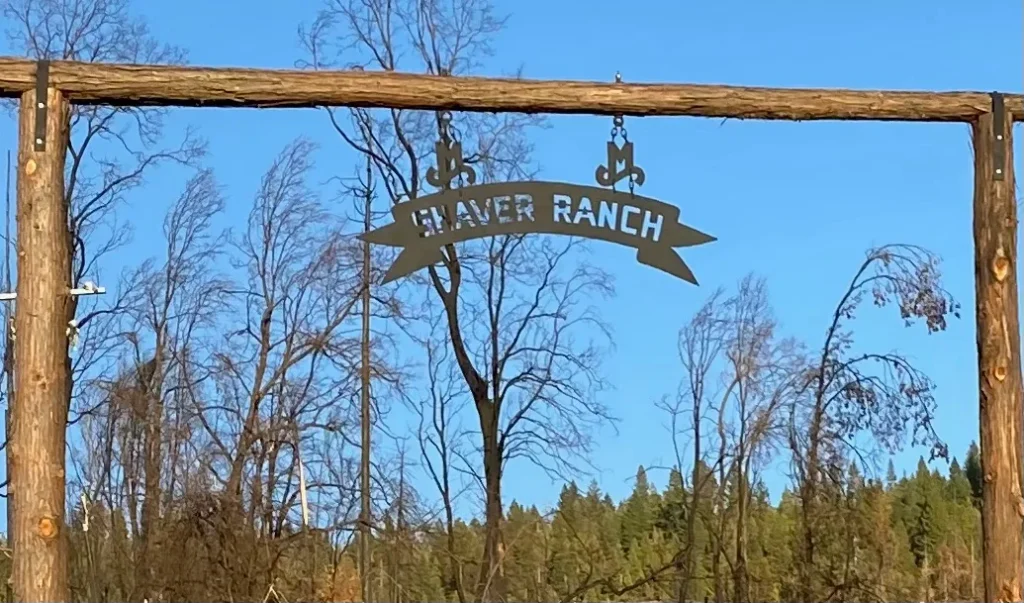
The devastation has removed landmarks, but there is the creek and meadow, the familiar curve of the highway, the rock wall, and the Shaver Ranch sign at the entrance.
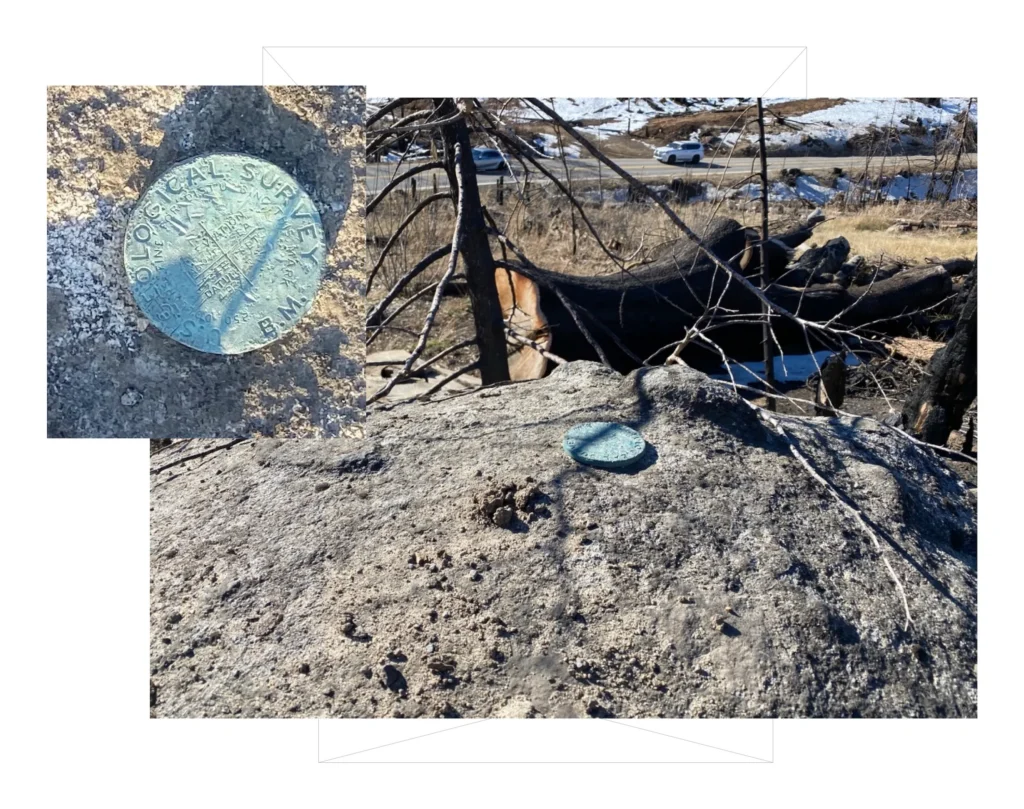
Across the road, moving charred branches and debris, there is the tarnished brass benchmark embedded in the boulder: “4,938 feet above sea level”.
Yes, this is the place.
From this boulder, most of the ranch can be seen, and without the thick foliage of trees, the contours of the surrounding mountains are more visible than before the fire. This idyllic meadow on Jose Creek, formerly surrounded by pines and cedars, is set in a small hanging valley between the crest of Pine Ridge and the San Joaquin River Canyon. Just a few hundred yards below the meadow, the creek plunges 3,000 feet down the steep mountainside through Jose Basin to the San Joaquin River.
Because of the steep terrain on both sides, this narrow shelf in the mountains was found to be the only practical route from the foothills to the high mountain basins of Shaver and Huntington Lake and the headwaters of the South Fork of the San Joaquin. The trail of the indigenous Mono Tribe went through this area, and the makers of the original wagon road followed their lead.
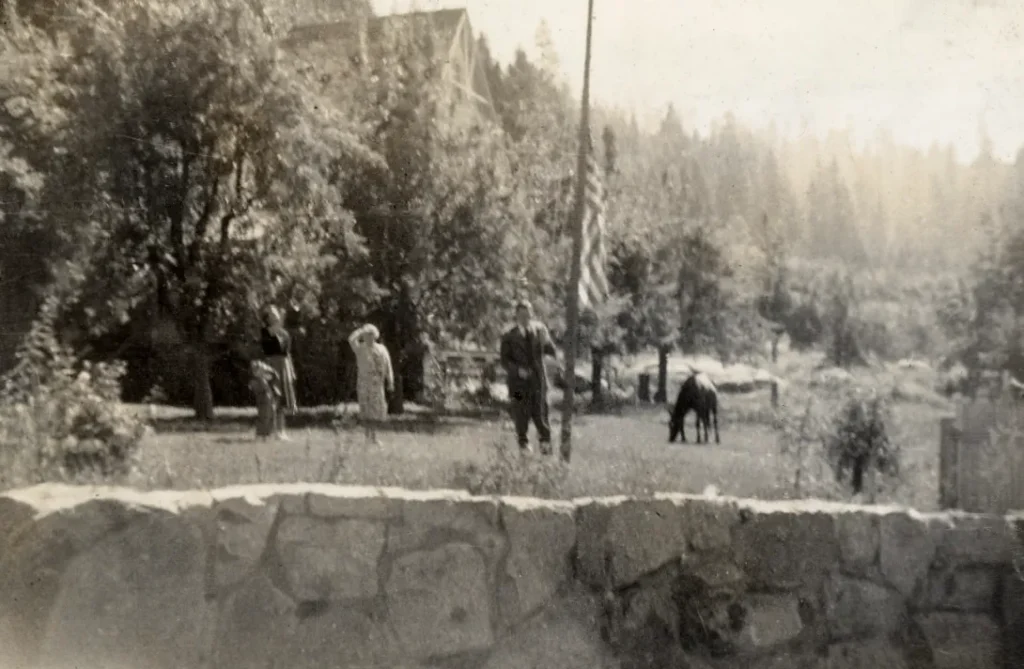
In August 1966, my father, Charles Burr Craycroft (generally called Burr), a grandson of Lena and Charles Burr Shaver, was on his final trip to the Shaver Ranch, where he had spent much of his youth. He wore his usual mountain attire, a red plaid Pendleton shirt, and the black Stetson hat which he inherited from his uncle Harvey Swift. Standing at the entrance to the ranch, he pointed out the rock with the benchmark across the road near the old barn. Walking over and lingering there in the shade of a Black Oak, he recounted “Grandma Shaver’s” stories of the early days in these mountains and how this came to be the Shaver Ranch.
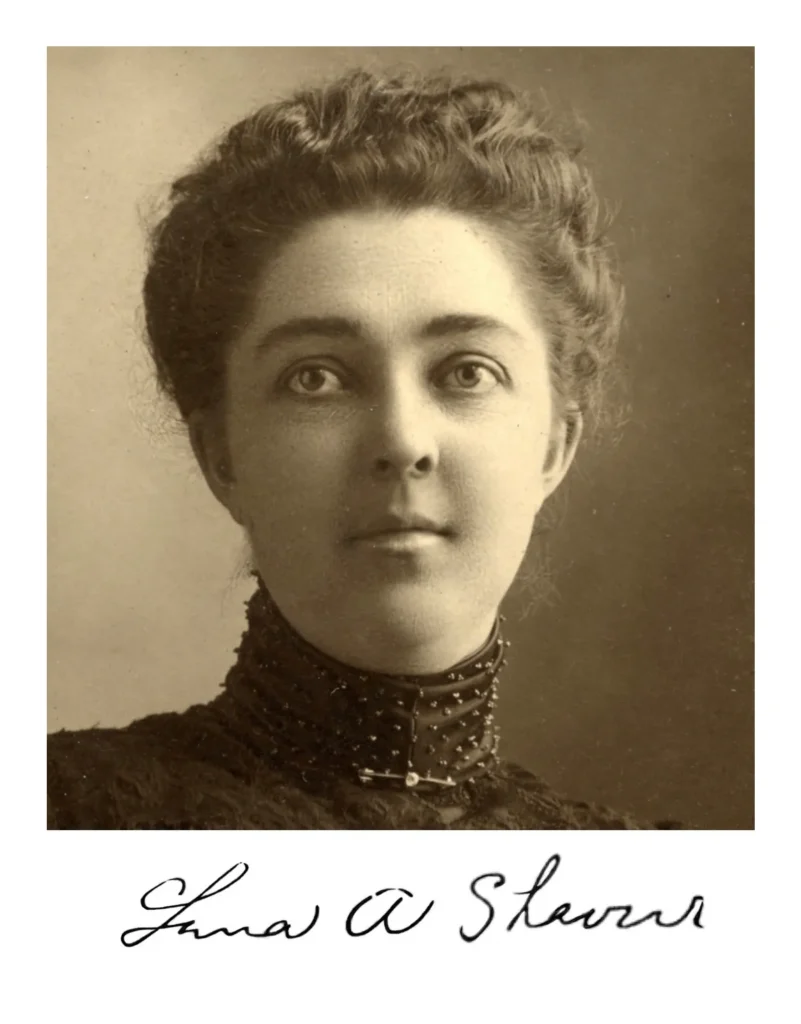
Lena Shaver has not been mentioned a great deal in the history books. Yet, she was a remarkable individual who, as well as founding the Shaver Ranch, played an important role in the Fresno Flume and Irrigation Co. and the early development of the Pine Ridge & Shaver community. Strong and forthright, Lena had good business sense and was a close confidant and advisor to her husband. Her pragmatic nature balanced his idealism.
Lena was 29 when she made her first trip up the Toll House Grade on a wagon led by oxen. It was July 4, 1893, Independence Day. She and her young daughters Grace and Ethel were on the last leg of the week-long trip from Michigan to reunite the family. Charles Burr (C.B.) Shaver had spent most of the previous two years with his partner Lewis P (L.P.) Swift here on Pine Ridge, as they supervised the construction of a new venture, The Fresno Flume and Irrigation Company. The teamster driving Lena’s wagon surely would have stopped to rest and water the weary oxen at Kenyon’s store, which stood where the gate of Shaver Ranch is today. It was an oasis after the trip up the grade. Little did Lena know that this would become her beloved mountain home one day.
Though this was a big change from their comfortable life in Blanchard, Michigan, the scene here was likely reminiscent of Lena’s childhood. She was born in a small community called Cedar River in the woods of Pennsylvania. Like the Shavers and Swifts, Lena’s family, the Roberts were small family farmers who moved west to Michigan in the 1870s to try to take advantage of a lumber boom in the pine forests. Now the next generation was packing up and heading west again, a big move.
The family settled into a cabin in the lumber camp, which would later turn into the town called Shaver. By the end of the season in 1893, the mill and flume were complete and ready to go into full production the next spring. In Fresno, Lena practiced the intricacies of Victorian etiquette so they could properly entertain business associates and financial backers in the expected fashion of the day. Back at Shaver in the spring, the social life was more relaxed, with financial backers, management, crew, surveyors, engineers, and forest rangers often meeting on the cabin’s porch, on a granite boulder, or around a campfire.
These were happy years for the family, and they welcomed their third daughter, Doris, in 1897. By the turn of the century, the company was in full swing.
Meanwhile down the road at Pine Ridge, the community was growing and becoming a tourist destination. The Kenyon family’s store was prospering and a blacksmith shop, a small schoolhouse, and the Pine Ridge Post Office were added. They needed more room for guests, so they built a “real” hotel, with the current Victorian style and finishes, not the typical rough mountain building. It had to be painted and have smooth siding, trim, and moldings with shingle roofing, not rough shakes. These materials were not available in the mountains and would have to be brought up the grade from the valley, which was an expensive proposition. So Sam Jennings, the Kenyon’s son-in-law, rigged up machinery and used all local lumber to produce what they needed. In 1903 John Armstrong bought the operation and continued to run the store and hotel and they raised apples, pears, and cattle.
The mill business continued to grow, but in 1901 LP Swift died suddenly of a heart attack, and his brother Harvey, who was married to Lena’s sister Minnie, came out from Michigan to take over his brother’s role. About this time, CB was diagnosed with a severe form of diabetes. He took measures to improve his diet and stopped smoking, and was able to continue his active lifestyle for a time. But he became ill in late 1907 and, with his immune system weakened by diabetes, passed away on Christmas Day. He was just 52 and Lena 43. With CB’s untimely death, Lena became a director of the company. She worked closely with her brother-in-law Harvey Swift, who assumed C.B.’s role as president, along with Arthur Long, the vice president, and Charles Musick, secretary. Together, they managed the business through some of its most productive years until they sold the company in 1912.
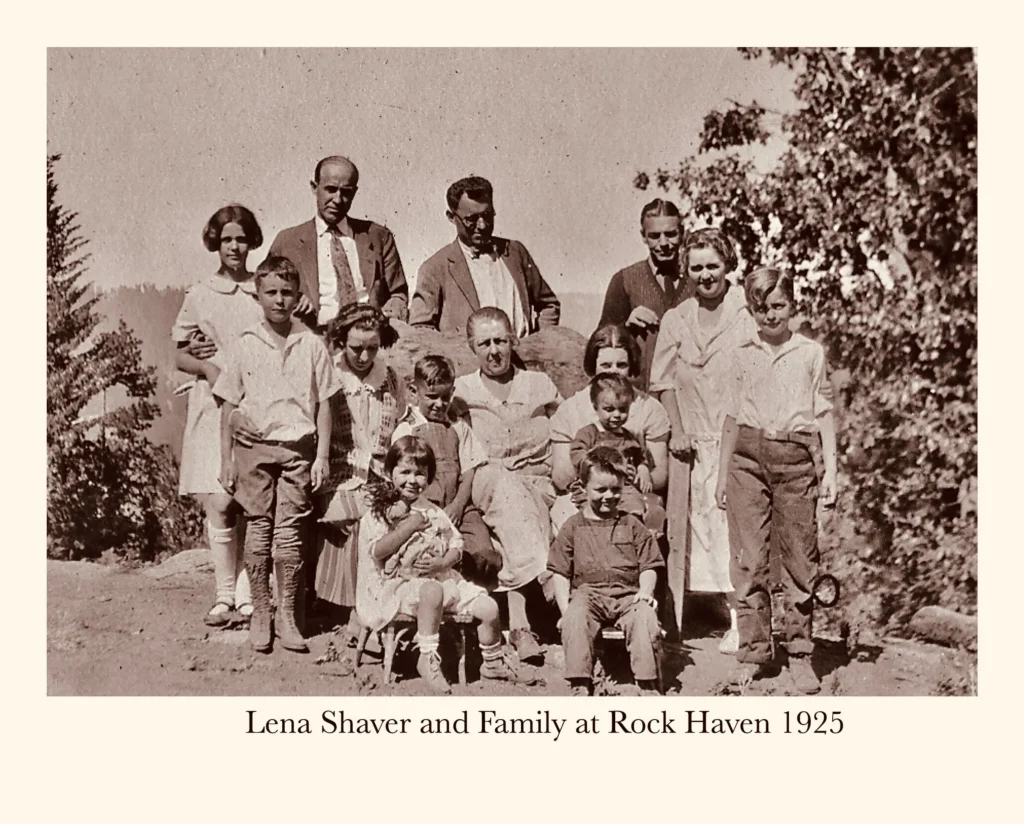
Lena then embarked on a new career in real estate development and carried out one of C.B.’s unfulfilled dreams. She purchased a lot in downtown Fresno on the corner of Fulton and Merced Streets and built the Shaver Building, leasing the ground floor to retail stores and the second to the Sierra Hotel. And then Lena and her son-in-law, Dr. Harry Craycroft, purchased 160 acres on the slopes of Stevenson Mountain and created the development they named Rock Haven. The name was a play on words of one of the towns from her childhood, Lock Haven, Pennsylvania. Lena then negotiated with the Edison Company to have the company dismantle her cabin piece by piece and rebuild it at Rock Haven.
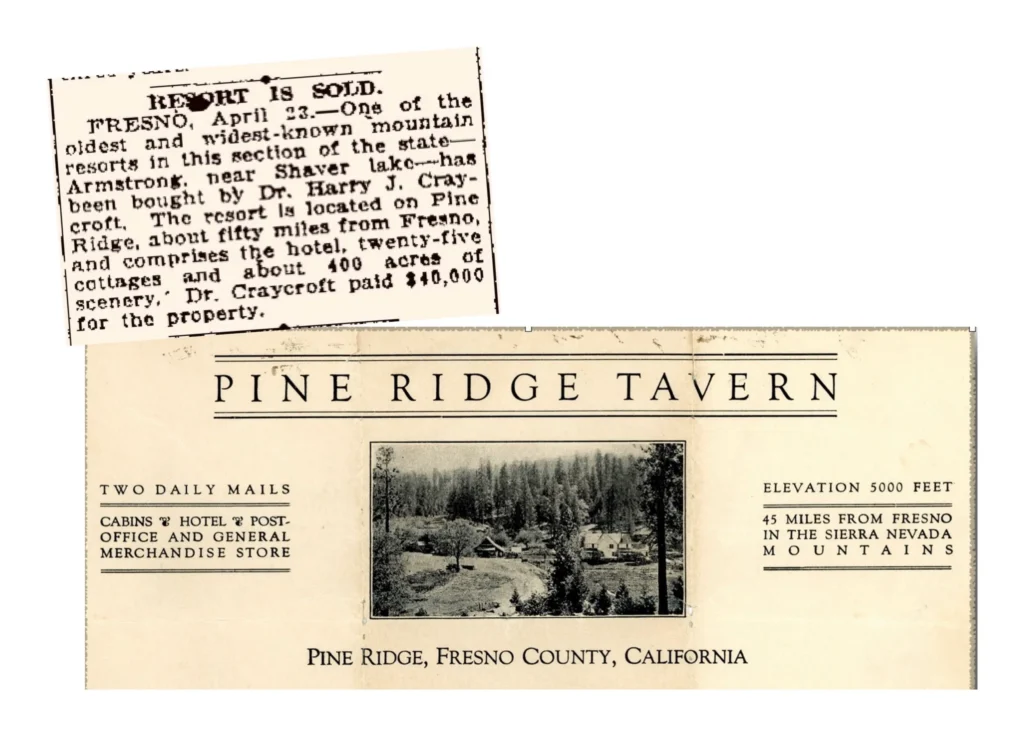
The idea of the Shaver Ranch was born in 1921 when Lena and Harry purchased the Armstrong’s Resort as an investment, and operated as the Pine Ridge Tavern. The business was very popular in the “Roaring 20’s”, attracting people from far and wide. The rooms in the hotel were $4/day, cabins $21/week and there were 40 acres of campgrounds and camping was free! Unfortunately, in 1930 with the start of the Great Depression, the tourist business slowed to a trickle and they were forced to close the hotel.
They stopped taking in guests and the property became the family ranch and the old hotel became their mountain home. Lena had loved her cabin at Rock Haven, but she enjoyed the comings and goings of travelers and running the store and post office until the building burned in the mid ’30s. And here there was plenty of room for the entire growing family and Lena’s sister, Minnie Swift, built her own cabin on the slope above the home. They all spent many happy times here. The family took part in the work around the ranch during summers and weekends. There was always plenty to do, tending to the horses, gathering firewood, clearing dead trees, planting new ones, building, mending fences, and checking on the finicky spring box. It was a magical place, full of artifacts and memories.
In Lena’s later years, Burr arranged for a young woman from Kingsburg named Adeline Nord to be his grandmother’s companion during the summer in the mountains. Adeline became a close family friend and later would glow as she recounted her times with “Mrs. Shaver,” driving her about, listening to her stories, and learning about the mountains. That summer, Lena passed a torch to Adeline, who herself became a mountain legend. Adeline would later marry Karl Smith and purchase and run the Diamond D Ranch at Blaney Meadows, above Florence Lake, now called Muir Trail Ranch. In the winters, she taught school in Auberry and returned to the ranch each summer, running the operation with her daughter and granddaughter for many years after Karl’s passing.
Though Lena had always hoped to spend her final days at her mountain home, to her great sorrow, the doctors advised against her going to a higher elevation. She died peacefully at her home in Fresno in May 1939, a week after her 75th birthday.
In establishing the Shaver Ranch, a place was established where the entire family—Lena’s three daughters, seven grandchildren, and sixteen great-grandchildren—could gather, call home when far away, and return as often as needed. And this legacy continues to provide inspiration for the following generations.
In 1963, the grand old house caught fire, likely due to an aging electrical system, and the old dry wood quickly burned to the ground. A collection of antiques and historical memorabilia worthy of a museum was lost. Fortunately, some photos and documents had been distributed for safekeeping or copied through the years. Douglas McDonald, son of Lena and CB’s daughter Doris, replaced the old home with a fine new one of his own, a mountain lodge.
Now, this home has been taken by the Creek Fire, along with many others and thousands of acres of forest. Despite the land being laid bare, there is something of the spirit of those who came before here, evoking their dreams and accomplishments. And at the top of the meadow, a group of trees survives. Others, partially blackened, are leafing out along with many shrubs. It will take time, a long time. But it will grow back.
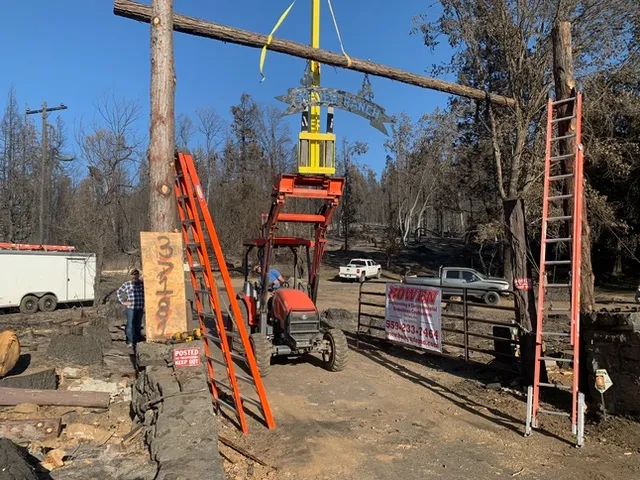
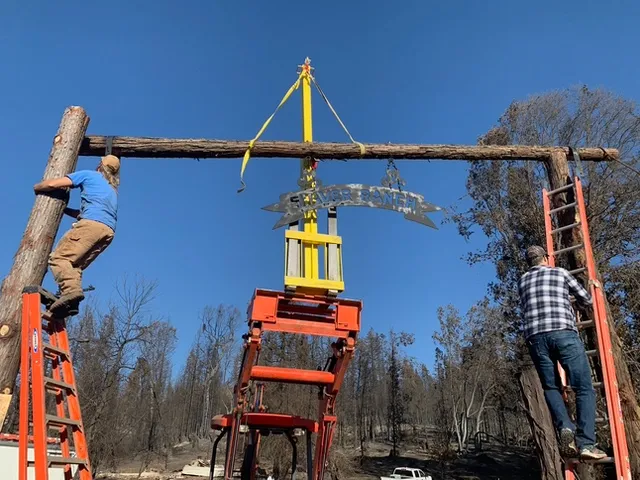
Steven McDonald, son of Douglas, and his family have put the Shaver Ranch sign back in place above the entrance gate, standing proud. A welcome sight after the shock of seeing it on national news, hanging there in the wake of the Creek Fire. The difficult tasks of cleanup and erosion control are underway. Seedlings are being planted. Plans are being drawn. The first steps.
Donna Baker Martin, Ed.D. | Ockenden Ranch, Shaver Lake
6-8-22
June 8, 2022:
It has been a year and a half since the Creek Fire started and I did not want to write my story. I avoided it because it meant it was real. I encouraged others to write their stories since I was part of the Storytelling Group but just hadn’t gotten around to writing mine. It was not until I read Tori Goss’s story that I decided to write. I had no idea what it was really like. I was reminded by a survivor recently that I was the one who encouraged him to write. He said it was hard to put pen to paper and kept waking up in the middle of the night. He finally wrote his story describing his loss. Now it’s my turn.
Friday September 4, 2020
It was Friday of Labor Day weekend, and I was looking forward to a small gathering at the Isaacs’ cabin on Cold Springs in Ockenden. My husband, Louie, and I were expecting our daughter Kirsten and her son for the weekend, but they were not expected until later, so we were happy to visit with friends that night. The cabin was just above Highway 168 and as dusk came, we heard several sirens in the distance and thought, “Oh no, hope there was not an accident at the lake.” This was a familiar sound in the summer. A forest fire was the last thing that occurred to us. At end of the evening, we headed home to wait for Kirsten and Lukijah who arrived a little later that evening.
Saturday, September 5, 2020
At 5:00 am, we got a call from friend and neighbor Bobby Coburn who had gone to town because there was falling ash and he wanted to see what was going on. He learned Big Creek was being evacuated. About that time, Kirsten woke up telling us it smells like smoke, and she would know because she evacuated during a fire near Weaverville a couple of years ago. She knew the smell. We did not panic because we knew there had been several small fires that were quickly put out over the years, and we thought it would be just fine.
At 5:30 AM, Deanna Coburn (Bobby’s wife) banged on the door, “We need to go, there is fire and we need to leave.” She was quite emphatic then she went next door to alert the Ballenger’s. Again, we did not panic though we decided to leave the house as soon as possible. We packed a weekend bag, thinking we would come home in a couple of days. Then, I gathered the food I just bought for the weekend, and we headed to the Ballenger’s house in Fresno to wait. It was 7:30 AM.
For the next several days we talked about “what ifs” and what would we do. Do we have a house? What if it was all gone? What then? We filled our days trying to learn more. Where is the fire now? Are our friends safe? What was the latest update?
Bobby and Deana’s son works for Edison, and we got updates from time to time. On Monday we learned our neighborhood was spared. A quick video showed our house still standing and I was stunned that our deck umbrella was wide open. Funny how something like a simple umbrella was a symbol of hope and calmed me. For the next three weeks, we passed the time visiting family and friends, and it was so comforting to just do something normal like watching grandchildren play.
When we were notified that we could go home September 25, we were in Visalia with friends, so we headed up the mountain in two cars with Louie a little ahead of me. I thought I was ready for the devastation I was about to see because I had seen it on the news and internet. First, there was the char and burned trees. I was ok. Then I saw Cressman’s, and I was ok. Fire trucks were going up and down the highway. As I drove on, I looked up the hill for the familiar houses I saw every time I went up to Shaver: all I could see were chimneys. That’s when it hit me and I started crying. As I drove on, I looked for the house right by the road and saw only a chimney. I could not stop the tears.
I continued to drive up until I got to my neighborhood. I had seen on the news about the heroic neighbors and firefighters who saved Ockenden (see Tori Goss’ story), so I drove onto Cold Springs Road to see for myself. That’s when I saw a fire truck “Fresno County Fire Engine 86” and lost it again. I thanked the fire fighter through my tears then I went home hugged my husband and counted my blessings.
“I have a project for us.” It was my mom calling from Shaver. My husband, Tim, and I were getting ready to load our dogs into the car and head up to my parents’ house to spend Labor Day weekend like we do almost every year. This year it was different. Covid 19 had closed down almost everything in 2020 so we were looking forward to being able to roam around in the mountains. “The Elderberry bush down the road is full of ripe berries so I want to make Elderberry Jelly,” she said. “Great!” I replied, thinking that sounded like fun. We packed up the canning supplies and headed up the hill Friday after work.
Our dogs always start getting antsy once we’ve passed Cressman’s. They know we are getting close. My parents, Cissy and Peter Van Vleet, live in Ridgetop, which is just beyond Shaver Ranch. It is the first development my dad did in Shaver and is right next to the property his grandparents used to take him to as a kid. Finally, we pulled into their driveway and unloaded the car. After dinner we grabbed our bags and headed up the road to pick our berries.
Later that evening while we were watching TV I noticed a text from my sister, Keri, who lives in Texas asking if I had heard about a fire in the area. I told her that I hadn’t. She had heard something about a fire in the Big Creek area from a Facebook app and noticed the same post plus others from people who have cabins in that area. I told my parents, and we checked the local news feeds but didn’t see anything about a fire.
The next morning we got up early to start our project. My dad said he had seen a report on the fire but at this point it was small and the fire crews would probably be able to contain it. Saturday went on. We went about washing our berries and picking them off of the stems. We kept hearing reports about the growing Creek Fire. It was spreading but still nowhere near us. My parents’ house is on top of a ridge and we could see smoke. Dad pointed to the top of the next ridge and said he would be worried if he saw the fire there. Still no worries.
As the day progressed we kept hearing evacuation notices, first Big Creek then the town of Shaver Lake. When they issued the notice to evacuate everything north of Littlefield Road I started getting nervous. Ridgetop is just south of Littlefield Road. My husband and I started gently suggesting that it might be a good idea to pack up a few things and head down the hill to our house for the night. By late afternoon we had talked them into it. My husband grabbed some family photos from the walls, we took some papers from my dad’s office and they packed a day’s worth of clothes just in case. We went down the hill with the elderberries.
I am glad we came down then. My parents got their official evacuation notice on their cell phones around 2am Sunday morning. We were all safe in Fresno. We continued our jelly making project in my kitchen all the while getting updates on the fire. Reports were all over the place ……the number of structures lost, where the fire was spreading, percent containment, etc. As the day went on, especially when we saw images of Cressman’s and then Shaver Ranch burning on the news, we thought their house was probably gone too. We started to mourn the things we didn’t bring down with us. By the end of the day we had 12 jars of Elderberry Jelly and still a lot of uncertainty.
It wasn’t until a few days later that my dad got a text from a relative on the Volunteer Fire Department showing a picture of our house still there with a big four-point Buck standing on our walkway. What a relief that was. Our family was lucky but sadly many of our friends were not.
It was almost six weeks before my parents were allowed to return home. They spent the time going between our house and my sister’s house in Texas. They still had a house in Shaver but no power or drinkable water.
I remember the first time we drove up to their house after the fire. The forest looked like a science fiction movie. I had spent a good portion of my life in the Shaver Lake area , raking pine needles, swimming in Dinkey Creek, boating, snow skiing and just playing games and hanging out at the old cabin. It felt like my backyard had burned up. I’m sure others felt the same way.
I can only imagine the beauty of the Sierra forest as I remember it. The big trees will not be there again in my lifetime. I came across this Native American proverb,
“We don’t inherit the earth from our ancestors, we borrow it from our children.” Our Mountain Strong community is replanting the forest for our children. We need to continue to work together on forest conservation to make sure future generations will have a beautiful backyard to play in.
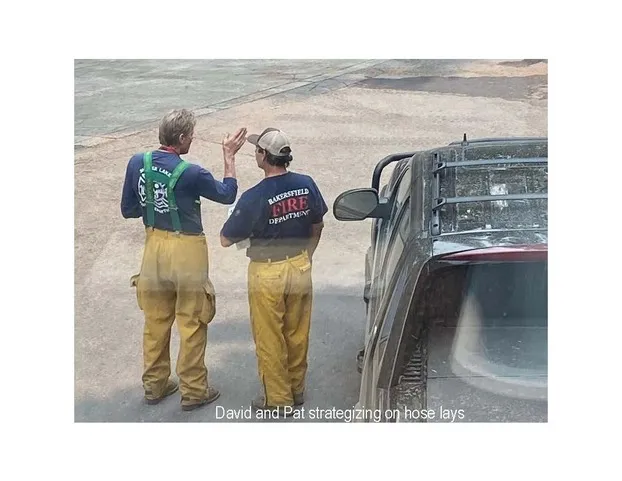
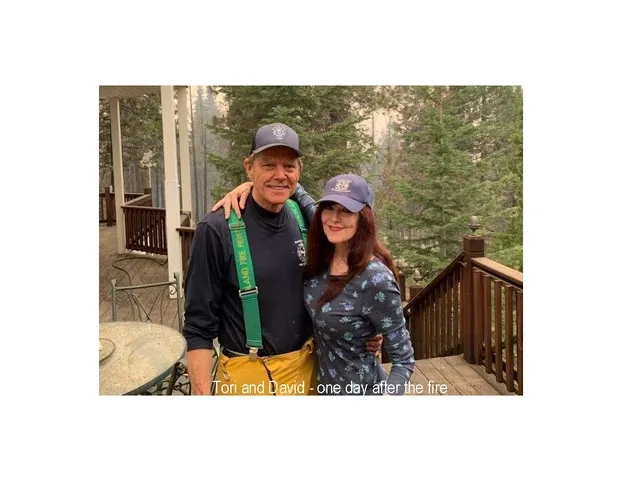
My name is Tori Lysdahl-Goss. I was raised in Shaver Lake and graduated from both Big Creek Elementary and Sierra High School. After many years away pursuing my career as a professional singer and actress, in 2013, my husband, David Goss, and I returned to Shaver, becoming full-time residents of Ockenden Ranch. David is a tax attorney and CPA practicing in the Fresno area. Growing up here, my family and I never really worried much about a devastating wildfire due, in large part, to the expert management of our forests by professional foresters such as John Mount. However, by 2015, and after years of severe restrictions on logging, historic drought and millions of dead and dying trees due to the unprecedented Bark Beetle infestation, we had to face the fact we were living in a tinder box just waiting for the strike of a match. Given this existential threat, David decided in 2016 to join the Shaver Lake Volunteer Fire Department (“SLVFD”) in order to acquire the firefighting knowledge and skills needed to successfully defend our home and community from a catastrophic fire which, in our view, wasn’t a matter of if, but when. So, over the next 4 years, David and I, along with our closest neighbor, Pat Caprioli (a retired City of Bakersfield Fire Department Captain with 35 years of firefighting experience), began preparing to defend our homes from the inevitable.
Preparing For The Worst Case Scenario
With the training and experience David was gaining as a SLVFD firefighter, he and Pat began to regularly discuss and strategize on how best to defend our homes and neighborhood. Initially, Pat was able acquire several hundred feet of surplus fire hose, nozzles and connectors from the Bakersfield Fire Department. David and I purchased Class A foam and applicators (the same type used by fire departments to suppress wood fires) to prevent the falling embers of an approaching wildfire from igniting “spot fires” on our decks and surrounding trees. We then strategically deployed three foam applicators (each attached to 300 feet of hose) around our house. In addition, as highly recommended by CAL FIRE for creating a “defensible space,” we limbed-up (cut and removed the lower branches known as “ladder fuel” from the bottom 10 to 12 feet of a tree) all the trees within a couple of hundred feet of our homes. This tactic ultimately gave us a big advantage during the Creek Fire by denying numerous spot fires the ladder fuel needed to get far enough up our trees to fully ignite them. Fire preparation didn’t end there. David sought and received expert tree falling instruction and coaching from local residents Jeff Young and Doug Koerper. They taught him how to safely drop, limb and buck almost all of the standing dead trees within 200+ yards of our homes. Getting those drought and Bark Beetle victims on the ground was extremely important because, as David had learned from fighting several small wildland fires in the Shaver Lake area, if dead trees are on the ground when they’re ignited by wildfire embers (sometimes called “firebrands”), they can often be successfully extinguished, or at least managed, with the application of water or foam from a fire hose. However, if those embers ignite a 100-200 foot tall standing dead/dying tree, it’s almost impossible to extinguish the resulting explosive fire (called “torching”) in the top of the tree, because wildland firefighting engines generally cannot pump water much higher than about 60 to 70 feet, thus leaving the top 50 to 100 feet to torch and produce enough radiant heat to then ignite other nearby trees, even if they’re green and healthy.
Worst Case Scenario Realized
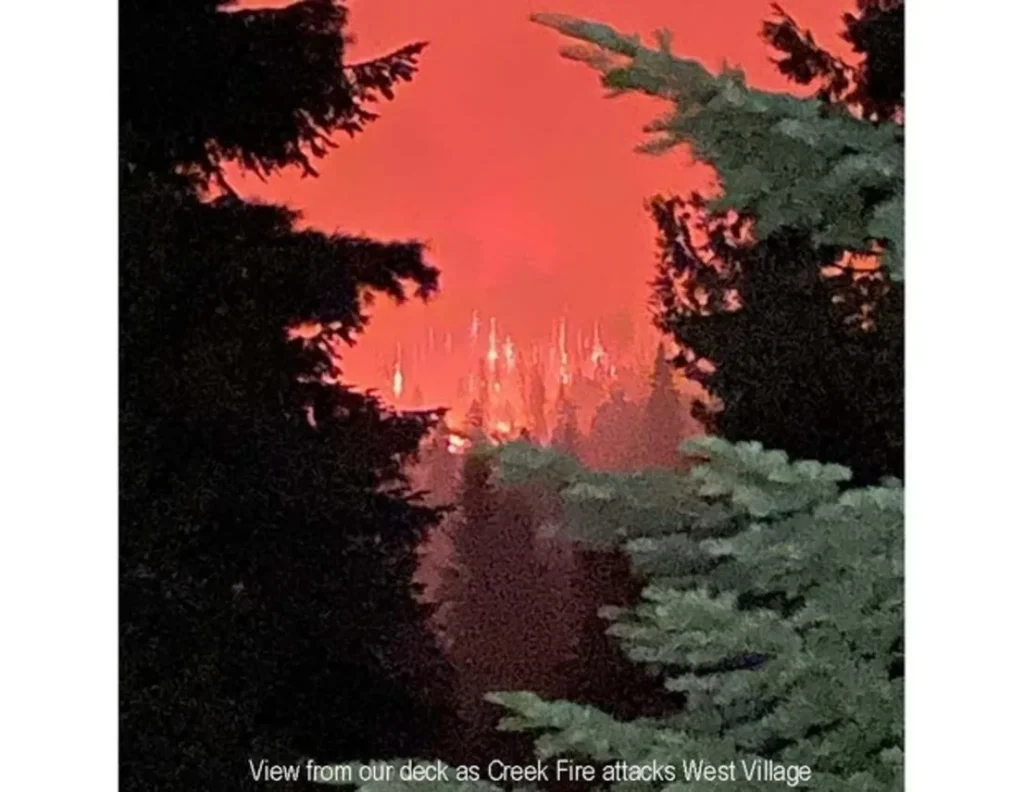
Sadly, on the evening of September 4, 2020, our worst fears were realized. The Creek Fire erupted at Camp Sierra, growing from a 2-5 acre burn to a raging, out of control inferno within hours. The fire rapidly expanded over the Labor Day weekend and, by Sunday, September 6th, as it threatened Shaver Lake’s West Village, David and his fellow Company 60 SLVFD firefighters were called on to join CAL FIRE and US Forest Service crews in defense of several homes along Limber Lane. By then, Shaver Lake was under a mandatory evacuation order and, to my knowledge, I was the only civilian resident of Ockenden who’d refused to comply with the evacuation order, choosing instead to stay and help David and Pat defend our homes and, to the extent possible, our community. By 8:00 PM that evening, while David was battling the blaze in the West Village, I could see from our top floor the Creek Fire rushing down Stevenson Mountain and appearing to be heading towards Ockenden Ranch. I called David to alert him to the gut-wrenching sight I was witnessing. We both knew he couldn’t leave his post in the West Village, so he suggested that, to prevent wind driven embers from starting spot fires on the hillside below our home (which sits about 300 feet above Highway 168), I should start wetting down everything our hoses could reach. I immediately began doing that, continuing alone in the dark for the next 5 hours until about 1:00AM, when David finally arrived home after Company 60 was released from the West Village. Although exhausted, the imminent threat of fire was in the forefront of our minds and resulted in a sleepless night while we constantly scanned the surrounding dark wildland for any signs of approaching flames.
We’ve Got Fire
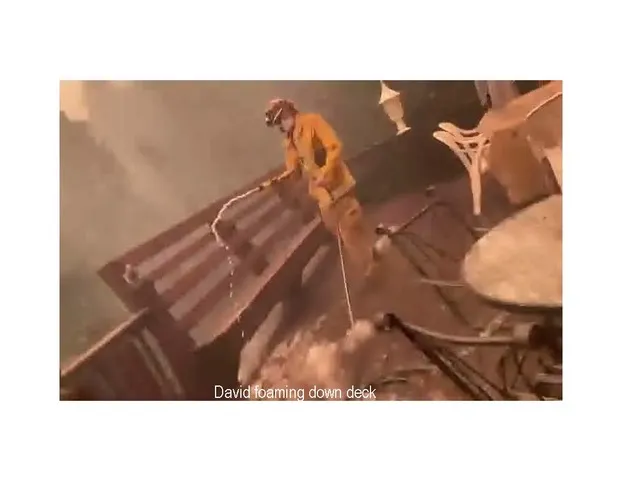
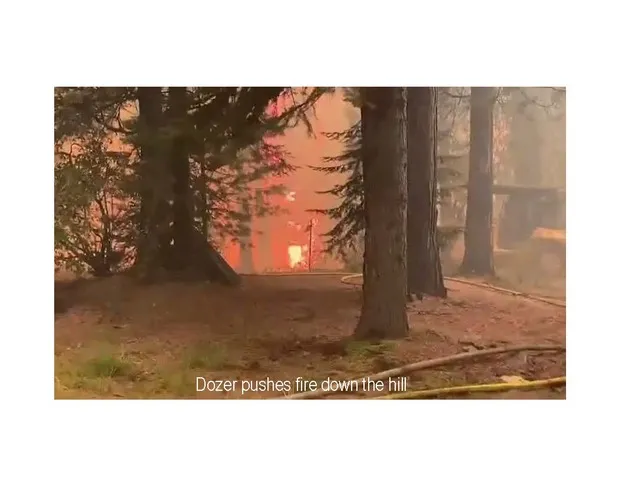
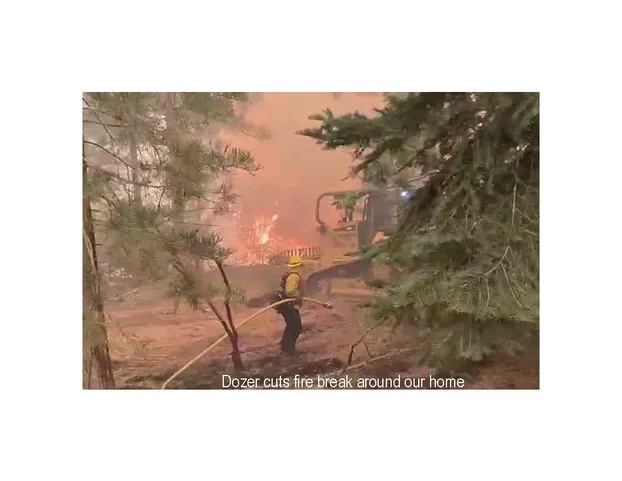
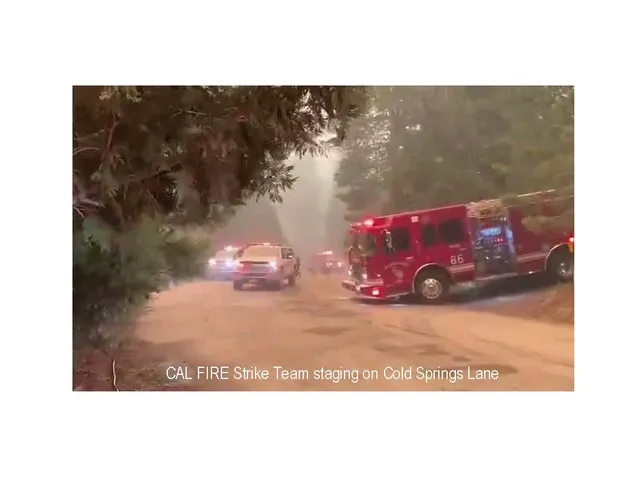
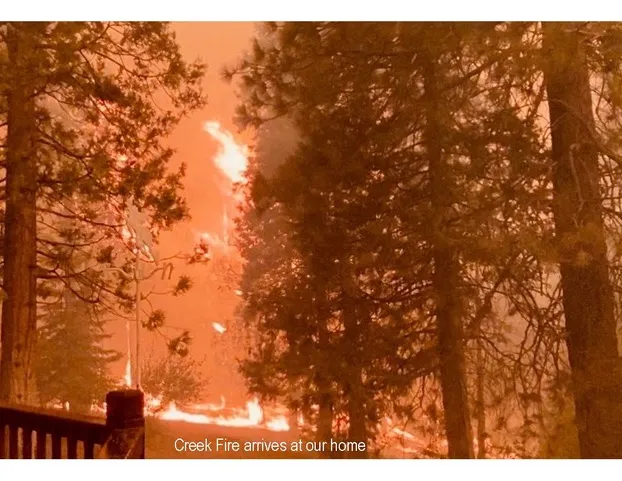
Fortunately, the fire spared us that night. However, by the next morning, Labor Day, September 7th, we could see and smell the smoke as it steadily advanced uphill from the Dogwood area below us. Given that, we worked feverishly to complete our final preparations. While Pat and David fine-tuned their placement of the approximately 500 feet of fire hose they had deployed around all sides of our home, I served as lookout, continuously hiking and surveilling the nearby landscape for any signs of fire. Suddenly, at about 1:30 PM, I caught the heartbreaking and knee-weakening sight of numerous spot fires popping up on our side of the highway. I yelled, “We’ve got fire!” to David and Pat, causing them to immediately shift from adjusting to activating the fire hoses. As the fire picked up momentum and marched towards us, bushes and trees instantaneously exploded into flames like Roman candles. It was about that time the very sobering realization hit me that we were likely going to be fighting this fire on our own because, from all indications, we were the only ones who knew that the Creek Fire had arrived in Ockenden Ranch. That is until, while David was out at the road charging (opening) the hydrant, a CAL FIRE Battalion Chief happened to drive by on patrol and asked him what he was doing and why on earth was he still here?!? David rapid-fire explained that the three of us had been preparing for several years to defend our homes against a fire like this and that we were currently doing exactly that because the fire had only moments earlier crossed Hwy 168 below us. Upon learning that the fire had jumped the highway (he’d been patrolling too far away to see this breach), he said he didn’t have any resources immediately available, but he’d try to secure some for us ASAP. We continued fighting the fire as it raced towards our home, eventually burning within 20 feet of our lower back deck at its closest point. Then, after about 20 minutes, as we desperately struggled to keep the fire at bay, to our utter amazement and eternal gratitude, the Battalion Chief returned with a CAL FIRE Strike Team, consisting of three engines, their crews and two bulldozers. The dozers went to work cutting a 50-60 foot wide arc-shaped fire break between our house and the flames. While Pat and the CAL FIRE crews fought the fire from the ground, David and I sprayed foam on our decks, windows and siding facing the fire, and on all of the trees within 20 to 30 feet of our structure. Each time a tree below us torched, exploding violently into 150+ foot flames, there would be a subsequent shower of burning embers and concussive blast of heat which would almost knock us off our feet. The firestorm’s deafening roar was akin to that of a jet engine, while it’s blistering heat burned like a blast furnace. Having no regulation fire gear myself, several times my hair and clothing ignited from the searing wind-driven firebrands, causing me at one point to scream at David to “FOAM ME!” He quickly did and it worked! Not only did it immediately smother the burning embers on me but, although there were thousands of them constantly raining down on everything around us, the foam prevented them from causing any damage.
Threat Contained – Vigilance Continues
Finally, after about six hours of battling the blaze with CAL FIRE, the threat to our immediate area was considered contained, though our burn scar and many dangerous “smoker holes” (where tree roots can burn for months underground) continued to smolder, making the air toxic and nearly unbreathable for weeks afterwards. CAL FIRE remained on Cold Springs Lane near our home for the next few days and nights in case the fire returned or flared up, some nights sleeping in their engines or on camping cots that Pat loaned them. Their amazing heroism was first proven to us by their very timely “HERE COMES THE CAVALRY!” response and, then again, by their vigilant patrolling of Ockenden Ranch for the next week or so. However, even though CAL FIRE remained close by, Pat and David took alternating two-hour shifts throughout each night, looking for any new threats to our homes or the rest of Ockenden Ranch. And, each night, I periodically scanned the wildland with binoculars for any sign of fire re-emergence. Adding to our serious concerns, was the fact that the fire cut off power on Labor Day evening to the pumps supplying water to Ockenden. We will be forever grateful to our good friend and neighbor, Doug Koerper, for loaning us his water buffalo (a large, portable water tank and pump), so we could extinguish any random flare-ups occurring near our property until water was restored.
Creek Fire Aftermath
Because David and I were among the very few who hadn’t evacuated, many of our neighbors, friends and acquaintances with cabins in the area contacted us for Creek Fire updates. I’d awaken every morning to numerous texts, emails and phone messages from panicky, distraught homeowners begging to know the status of their properties. One day, after checking on several Ockenden homes as requested, I hiked down our charred and still-smoking hillside to get a broader perspective of the devastation from the highway. While I was taking some photos, a Clovis PD cruiser passed by (on looter patrol), suddenly making a U-turn and roaring back to me, screeching to a stop. As both officers jumped out, unsnapping their holsters, they demanded, “What are you doing here?!?” I calmly explained why I was surveying the area after having stayed to help fight the fire. Stifling a laugh, the senior officer said, “No, you didn’t stay. EVERYONE evacuated! So, I’ll ask you again, what are you doing here?” As I again recounted the facts, the senior officer interrupted with, “What color is the paper tacked to the front of your house?” I told him it was red. He curtly insisted that that was impossible because red was only for residents who’d refused evacuation and clearly, EVERYONE was gone! Eventually, after running my driver’s license on their computer, they determined I was indeed a legitimate Ockenden resident but, nonetheless, they left me with this rather grim admonition; “Okay, you’re free to go home, but if we catch you ONE FOOT off your property again, you’re going to be arrested.” With that, I lost no time hiking up our steep hillside, thinking our encounter was over. Well, that is until I heard their patrol car skid to a stop in my driveway while I was unlocking the front door. Their eyes scanned our scorched hilltop, the sight of Doug’s massive water buffalo in our driveway and the numerous fire hoses criss-crossing our property, with their gazes eventually landing upon the bright RED “REFUSAL” evacuation notice stapled to our front fence post. There was an awkward moment of silence, then the younger officer suddenly blurted, “Oh my Gosh! I just realized you’re the people I saw on Channel 30 news a couple of nights ago! You really DIDN’T evacuate! You guys actually helped save your whole neighborhood! You’re HEROES!!!” I responded with, “Well thanks, but we just did what we felt we had to do.” Then, after noticing a disapproving glare from his superior officer, he briskly added, “But still, if we catch you off your property again, you’re going to jail. We clear?” I simply smiled and replied, “Crystal.”
Don’t Try This At Home
In closing, while we are immensely grateful that our preparation and CAL FIRE’s assistance helped us spare our homes and those of others in Ockenden Ranch from the Creek Fire, David and Pat both stress that NON-FIREFIGHTERS should NOT refuse to evacuate in favor of staying to personally defend their home against a massive wildland fire. Instead, they should COMPLY WITH ALL EVACUATION ORDERS!
Jean Larsen |Appleridge-Meadowridge, near Shaver Lake
4-19-21
Our Creek Fire Experience
Those of us who live in the mountains of California are always aware that it can happen – – and undoubtedly will happen, sometime – – (but it surely won’t happen to us.)
It did happen!!
We were among the lucky ones. We have lived in Appleridge-Meadowridge (off Littlefield Road) for just short of 30 years. On Saturday, September 5, James Parr with the Pine Ridge Volunteer Fire Department knocked on the door. He told us that we didn’t have to leave right now, but that probably we would be under mandatory evacuation orders by the next day. We had been following the local news about the fire below Big Creek and had already decided that the most we could do to help would be to get out of the way of the firefighting effort and get off the road to leave space for all the equipment rolling up the four-lane.
We packed up the cat, our computers, and clothes to last us two or three days. We were sure that it wouldn’t be a big deal and that the fire would be put out or burn the other direction in a few days. These scares had happened before. I scooped up family albums and the family pictures off the walls – just in case. We took Lee’s pickup and my car and headed to Fresno, intending to stay in our daughter’s condo in Fresno for the few days until the “all-clear” to return home. We were at our other daughter’s home in Fresno where the whole family had gathered for support, when we found out that my sister in Mt. Ararat Mobile Home Park in Auberry was being evacuated also. Lee had already left with our son-in-law to get the fifth wheel RV we leave at a friend’s property in Auberry – just in case. Two of our granddaughters then volunteered to go to Auberry to help my sister load up her cat and essentials and bring her to where we were.
At this point, plans had to change, as now there were three of us plus our cat and her cat and we couldn’t all fit in the condo. Our son and daughter-in-law live in Visalia. Their three kids were all away from home in different universities, so there were empty bedrooms. We were all invited to stay with them for the duration of the evacuation. We were still thinking two or three days!We ended up living with them in Visalia for five weeks! Our daughter-in-law gave me some of her clothes and even her mother gave me a couple of shirts. Our cat, my sister’s cat, and the resident cat we barged in on didn’t get along and couldn’t be in the same room together, so that created a “musical cats” kind of rotation. (The Auberry evacuation order was lifted after about 10 days, so we took my sister and her cat back home after a couple weeks.) We still weren’t allowed to return home to Shaver.
The first night away from home, in Visalia, we were given erroneous information that our home had burned. I spent the night mentally walking through each room looking at the paintings and various articles that were important to me that were now lost. I love our property and every tree and rock on it, and I couldn’t imagine it all gone. The next day we found out that the information was probably not true, but there was no way to be sure until several weeks later.
About the middle of October we were finally allowed to go back to Shaver to check on our home, but not to stay there – we were told we had to leave by 5:00 and head back down the mountain. It was a huge relief to actually see for ourselves that our home was untouched. The fire had crossed the highway on both sides of our area and the wonderful firefighters had saved all the homes! They even camped in the area, patrolling the edges for hotspots.
That day we went to check on property of friends near us and found a huge fire truck from Long Beach parked in their drive and four firefighters behind the lot, felling trees that were killed but still standing. They explained this was necessary so that the dead trees wouldn’t fall later and the impact bring up airborne particles still smoldering. The fire had come right to the back property line of our friends’ home and flaming embers had started small fires on their back deck!I thanked the firefighters repeatedly and the response was always, “No Problem”. I mentioned to one of the Long Beach firefighters that I had been raised in Long Beach. He questioned me and it turned out that we had grown up in the same neighborhood and gone to the same high school – 60 years apart!
During our evacuation, Lee was sure that he had lost a bonsaied Japanese maple tree next to the front door that he had lovingly cared for more than twenty years. That and a large red one in a pot on the front deck would of course be now dead, after five weeks of hot weather without water. That first time back we were amazed to see them both alive and happy. Lee is convinced that the firefighters who were protecting our neighborhood had simply looked at the situation, filled a nearby watering can, and saved the beautiful maples for us!
When residents in our area were finally allowed to come back to live, our family came up to help. We had liquified rot floating in the kitchen refrigerator and the garage freezer from five weeks without power. CalTrans was patrolling the area, I guess to make sure that it was really the owners, not looters, going in and out of the homes. They told us to put the debris in garbage bags and drag them out to the road, and along came a little front loader to scoop up all the bags of rot and debris. Neither fridge nor freezer could be saved and they had to be taken to the transfer station on Dinkey Creek Road. It turned out that here were so many families in the same situation that replacement appliances were hard to find.
Our kids helped scrub the smoke off the walls, vacuum and fabric spray the upholstery, and wash all the clothes in the closets. The house reeked of smoke for weeks and we had to buy an air purifier. Insurance eventually reimbursed us for the refrigerator, freezer, air purifier, lost food, etc. Things gradually went back to as close to “normal” as Covid allowed. As Secretary of Shaver Lake Lions Club, I was able to participate in the various efforts to help those who had lost their homes. Talking with people about the fire still makes me want to cry.
We were so blessed to have come out of this horrible fire relatively easily and we are very, very grateful for that – but we have many friends who lost everything.
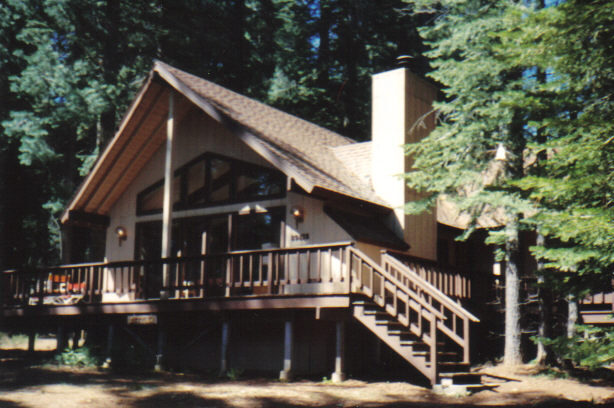
We built our first cabin in 1972 in Sierra Cedars. Having fallen in love with the area we built a larger resident-like cabin on Littlefield Road in Meadow Ridge in 1980. Even though most of our family lives in Southern California, we often drive up to “our place in the mountains”. Our grandson, David, and his wife, Connie, and four of their friends were at our place the weekend the Creek Fire broke out. They could see smoke beginning to build in the distance and local authorities informed them of the real danger and the need to evacuate. There was a huge risk that our beloved cabin would burn. The question quickly became what irreplaceable treasures would they have time to stuff into their cars??
The lamps in the master bedroom had bases made from Montana cedar and had been carved by an engineer on the Milwaukee Railroad eighty-six years before? The kerosine lamp above the fireplace his grandmother had filled with fuel each evening at the ranch in Montana where she grew up ninety years ago? And from the same ranch, over the fireplace hung a singletree, the bracket that attaches a horse harness to a wagon.
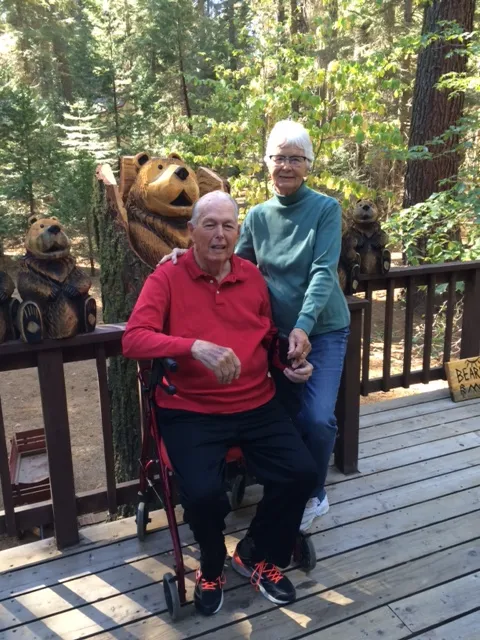
Bearitone, the massive bear carved from the trunk of a tree that overlooked the deck was impossible to move as was the Birdseye Maple dresser, a treasured possession of his great, great grandmother. But what about the wash board his other great, great grandmother had used while living on what was called “Soap Suds Row” where the enlisted men’s wives scrubbed the clothing of officers and their families at Fort Keogh, Montana a hundred and twenty years ago. Above the front steps hung a big brass bell. It was presented to his grandfather when he opened Flying Tiger Air Freight service in Saigon, Vietnam and was made from cartridge casings picked up on the battlefield during the Vietnam war? Above the kitchen counter was an enlargement of the tourist-attracting post card of his great grandfather pulling in the first fish caught in the newly completed Boulder Dam in 1932.
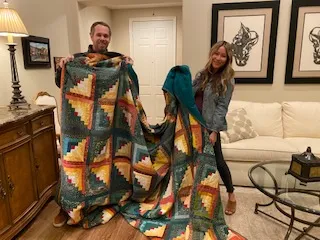
Two very special quilts would need to be included, one made by his grandmother from the fabric she had used in all the quilts she had made for her four kids, their spouses and eleven grandkids. The other one was even more special, the block pattern was called Autumn Pines and each of the seventy-two block in this king-sized quilt had been sewn together by either friends or family members who had, at one time or another, stayed at the cabin.
The list went on and on and through it all, to hide waves of emotion, David, at times retired to the bathroom to blot his tears. The three cars finally pulled out, and tugging at his heart was the question. Would he ever see the cabin again?
Yes, we were deeply blessed. The fire circled the area and the cabin still stands. It waits to welcome his return.