Category: Community Story

  • Ron and Rose Cates

    Ron and Rose Cates

    Ron & Rose Cates | Alder Springs

    9-27-22

    Many people seem to have an almost hour by hour recall of the Labor Day weekend when the fire started.  For me, I really struggle with even the days.  Not sure why, but let’s start earlier with the story of how we came to live on the mountain.

    We owned a cabin in Alder Springs from 2003 to August of 2020 and Alder Springs is part of the story for us.  We absolutely loved the place.  It was so green and lush and in its own little microclimate.  Trees, ferns, wildflowers, great people too.  Lots of history there with cabins going back to the days of stagecoaches.  Our cabin was called “Rocky Chalet,” we think due to all the rock terraces. It was a beautiful vacation cabin.

    We loved the area too and our long-term plan was to live in the area full time, so we purchased a property about a ¼ mile away and reluctantly sold Rocky Chalet, closing on the sale less than a month before the Creek Fire destroyed it.  We sold it to Drew Nelson’s parents.  Drew and his wife Allyson Brooks lived behind and above Rocky Chalet and we were so happy it was staying in the family, so to speak.  Sadly, they never got to see the place before it burned.

    As anyone who owns an old cabin like the ones in Alder Springs knows, they are a labor of love.  Like the repainting of the Golden Gate Bridge, you start at one spot and seemingly just keep moving around the place repainting, fixing wood rot, improving this, fixing that and then starting over.  17 years …we will never forget Rocky Chalet and Alder Springs.  It was a painful loss even though we had sold it.  Hope some people return and rebuild and enjoy the now amazing views.

    If we were going to live in the mountains full time, we needed a place built newer than 1959!  We purchased a place just up the road in April 2019 as our long-term plan while we lived and worked in the Bay Area.  Covid hit, Ron was laid off, and we moved in full time much sooner than we could have imagined!  Big curveball for sure.

    We worked hard over the next few months cleaning, clearing, cutting, piling, burning, and hauling off brush to create even more defensible space.  If you looked at the property from a satellite image, it had some of the largest clearances on the ridge.  We made every effort to not be overconfident.  While we cleaned the property, we settled into a good life together after a forced relocation.  Good times, good memories living our dream in the mountains.

    Labor Day weekend 2020 came. We obviously knew about the fire start, heard about the rapid spread.  Obviously we could see the smoke column as well, with it eventually growing into a massive pyrocumulonimbus, mushroom cloud looking formation.  At night we watched the fire creeping up to the far-off ridges knowing fire doesn’t move easily downslope.  At some point we started seeing vary large air tankers coming in and I recall going outside and literally cheering them on thinking that now we might make some progress.  Sadly, they couldn’t gain access to the fire.

    The glow was scary and got scarier the second night.  At some point the cloud collapsed and visibility went way down and it was like a hell scape.  We really still didn’t think our place could burn.  Nevertheless, we started packing some things.  We got the cars out, we got the quad out.  As we returned from our second trip to our family on Lodge Road, we saw signs marking each property and sheriffs at a house.  We asked them what was going on and they told us it was a mandatory evacuation and we had about 20 minutes to get ready before they escorted us out…

    I hope you never experience this.  It’s overwhelming and frightening and feels emotional even as I write this more than 2 years later.  We got back to the house and started scrambling.  Rose took videos of everything we had, gathered artwork, some pictures. It was such chaos!  I was outside running all the big sprinkler heads we had for fire protection all over the property, watering down the roof, moving all flammables away from the building like they say you should.  We looked for anything we could do to save our place.  In all the chaos we left behind boxes of family pictures now lost forever and so many other things.  Everything we did save is a “survivor” and has special meaning.

    We landed at our good friend Paula’s home in Clovis and it was an amazing refuge.  It was so stressful.  Our first night at Paula’s we got a call from the alarm company that a smoke sensor went off.  We hoped that was all it was…smoke intrusion.  Sadly, the next day or maybe it was two (I think) while I was at the first day of my new job, I got a call from an ex-Sheriff that had access that our place was gone.  Devastating.

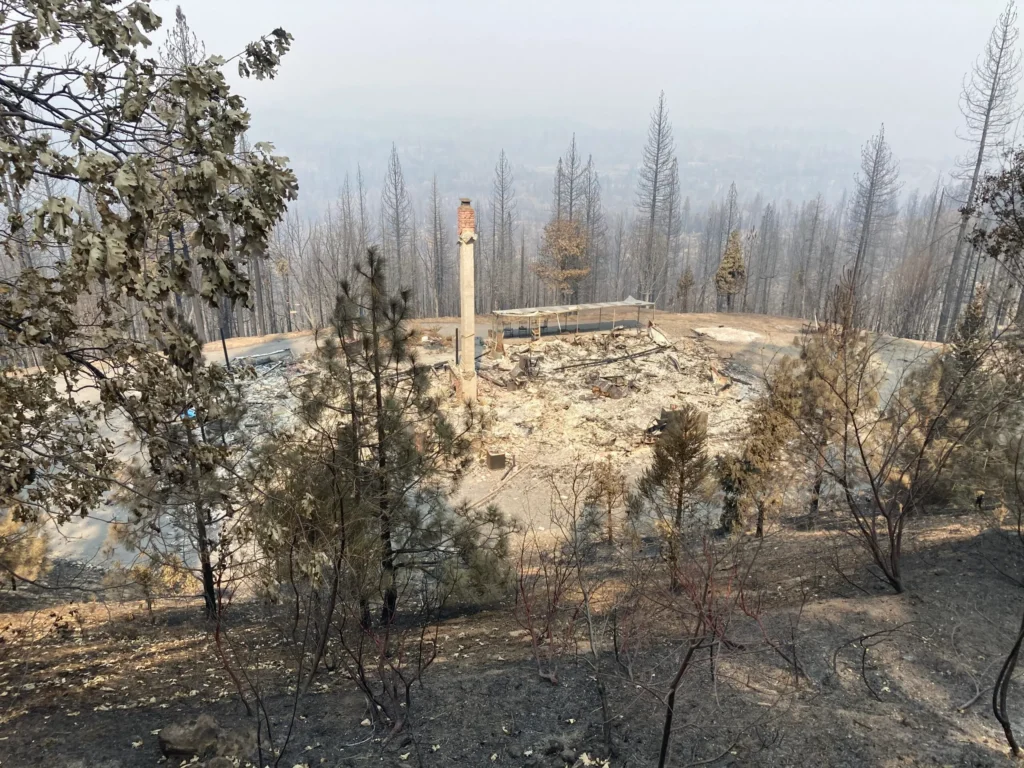
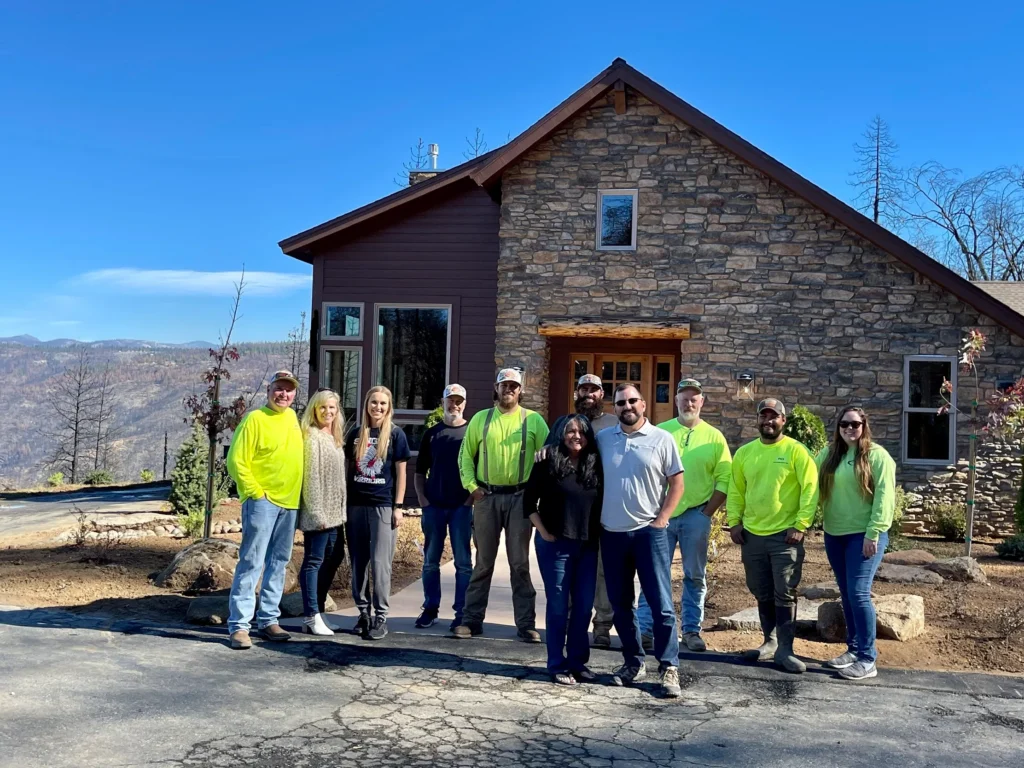
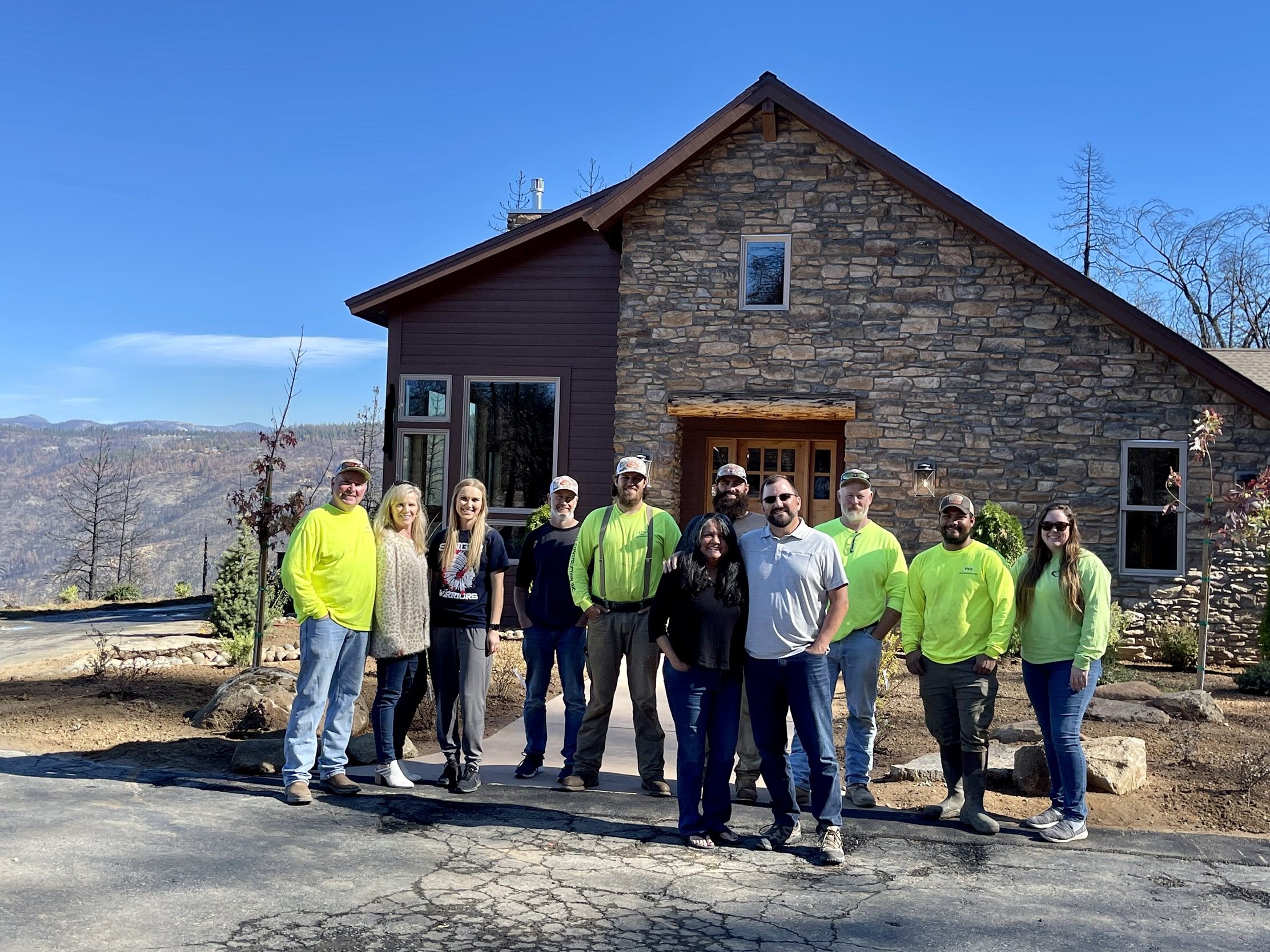
    The work of a lifetime, gone.  Starting over.  A new job you can’t lose if you want to rebuild.  Stress upon stress for us.  What to do?  We immediately decided to rebuild.  We contacted a builder that cared, contacted an architect and within 3 weeks had conceptual plans.  We broke ground in April 2021 and Pius Construction’s team had us moved in in November 2021.  We will always be grateful to them.  They fought for us at every step.  So many others helped in so many ways.

    I’d hate to think of where we would be without the focus of the rebuild.  It was costly to rebuild in so many ways, but we are back and couldn’t be happier.  So many others for so many reasons can’t rebuild at all or their rebuild is delayed.  It is a multi-year effort to rebuild communities after an event like this.  Know that many are still displaced and hurting and support local rebuild efforts is what I would ask.  Have insurance, don’t be underinsured like we were, have a plan to evacuate, and keep working on fire clearance.  Thanks for reading.
  • Nora Ray

    Nora Ray

    Nora Ray | Big Creek

    10-03-22

    Memories of the Fire

    By Nora Ray, age 8

    I will never forget the night the fire started. The night of the fire my mom put me to bed. She said, “It is going to be all right, the fire is not that bad.” The next thing I knew my mom was waking me up. She told me to get my favorite toys. I got in the car in my pajamas. We loaded my cat and my dog into the car. We drove through Big Creek and onto the Big Creek Road. The mountains were glowing red. I held my cat as the flames jumped over our car. I was terrified! My dad was still at home. I made my mom call him and tell him to leave.

    We made it to my Nana’s house. That night my cousin and I slept with our cats. They were so cute, they made us forget all about the fire. Soon after we got to Nana’s we were evacuated again. We lived with My Aunt Mary and Uncle Dwight for 40 days.

    When we got home our house was still there, but everything around us looked different.

  • Jim Gregory

    Jim Gregory

    Jim Gregory | Camp Sierra

    9-7-22

    I am a third-generation cabin owner at Camp Sierra. My grandparents started coming to Camp Sierra in the 1920s, as a retreat from the heat of the summer months in the valley, to relax, have fellowship and attend Methodist church meetings sometimes called Chautauqua. My parents were evacuated from our cabin during the 1994 Big Creek Fire. I recently retired as an agronomist and enjoyed the summer of 2020, typically spending five days at the cabin, sheltering in place during COVID, and returning home to Hanford to purchase groceries and to go to the hardware store for supplies for my cabin maintenance projects.

    In May 2020, I received a “notice of non-renewal” of the cabin insurance from my insurance company.  The National Forest Homeowners Association referred me to an agency, which gave a quote from Lloyds of London, for 4X premium for what I was paying.  In July, another cabin owner who is with Kingsburg Insurance Agency was able to get a policy on our cabin with California FAIR Plan, for 3X the cost of the previous premium.

    I closed the cabin and left, as planned, for Hanford on the morning of September 4. On the way down, I remember reflecting on the beauty of Shaver Lake. The next morning, we watched the news and began to piece together the events that were unfolding. My sister and her family were at their cabin, which is next to mine. When the evacuation order came that evening, my nephew left immediately with his family. My sister and her husband made sure the guest campers in the lodges were evacuated. Because of this, they were probably the last site holders to evacuate. Before midnight, the fire had crossed Big Creek Road, so they had to evacuate the alternate way out, which was the back route, via Big Creek and the back side of Huntington Lake. My niece, who is with the Fresno County Sheriff’s Dept., was involved with her responsibilities.

    The Creek Fire started at the bottom of the canyon about a mile below Camp Sierra and raced up the slope. I believe it was an act of God, for apparently there was a wind shift, allowing the firefighters, who had pre-positioned in the common area of Camp Sierra earlier that evening, to employ defensive measures and the firefighters were able to save us.

    One business in Shaver Lake, the next day, posted on their Facebook page that Camp Sierra was gone. Fortunately, that information was not true. There are seventy one privately owned cabins, and four were lost to the Creek Fire. The Camp Sierra Conference Association has lodging and facilities for about 150 campers. The only structure lost was the outdoor amphitheater. Sewer and water pipes were damaged, mostly by bulldozers making fire break lines. The fire completely went around about 40 acres which make up Camp Sierra.  Our tract is like an oasis, with a moonscape around us.  This can be seen across the canyon from the road between Big Creek and Huntington Lake.  We are having more bear interactions because they are seeking a natural forest habitat.

    Dr. Robert Junell, a good friend of ours, also from Hanford, lost his cabin to the fire in the Huckleberry Tract at Huntington Lake.

    The fire came up to the road’s edge across from our cabin. The fire started burning inside our stacked wood pile, about 50 feet from the cabin. A bulldozer dispersed the burning firewood, and firefighters put out the fire in the firewood, leaving a debris field of half charcoal firewood. I spent the next summer hauling off several dump trailer loads of half-burnt charcoal firewood and replacing the woodpile.

    One month after the fire, cabin owners were able to go to the cabins on a Saturday to empty the refrigerators and freezers, which had been without power since the fire, and to winterize the cabins. The rotten food put off a terrible smell. The scene around us was surreal, with an apocalyptic grey moonscape-like forest with smoke still coming from the ground.  Only day trips were allowed until the spring of 2021 because there were delays in getting a permit for the replacement sewer lift station.  In November, we put a sandbag barrier in front of the cabin because the burnt hillside above had been identified as a potential mudslide hazard.

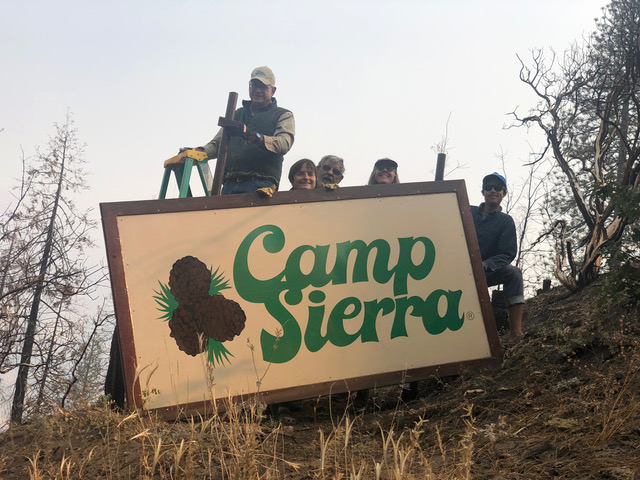
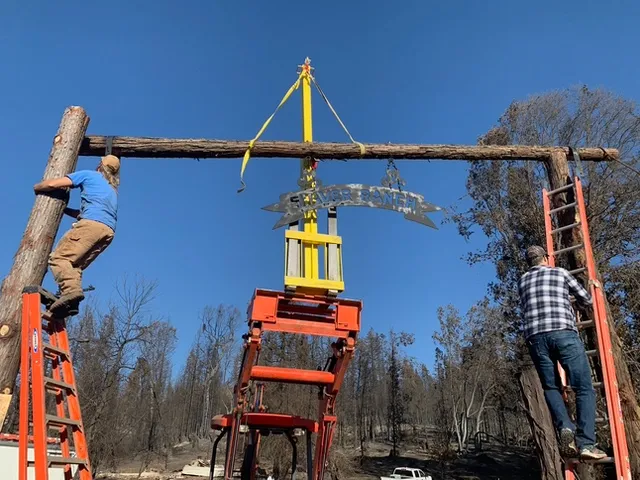
    In October 2021, I took the lead in replacing the Camp Sierra entrance sign at Big Creek Road, with help from a Hanford sign company and a cabinet shop. An article was written about Camp Sierra and the new sign in the November 17, 2021 issue of the Mountain Press.

    The 2020 and 2021 camping season pandemic shutdown was devasting for the Conference Association, because there was little income coming in, and yet the invoices kept coming. The 2022 camping season was a turnaround, and the Conference Association showed a slight profit. Having two cabins listed on the Airbnb website has helped.

    Whether as campers or cabin owners, Camp Sierra is part of our soul, and we feel closer to God when we are at our favorite place in the national forest. My daughter will inherit the family cabin and my grandchildren will hopefully continue to enjoy our special place.

  • Deana Coburn

    Deana Coburn

    Deana Coburn  | Ockenden Ranch,  Shaver Lake

    9-15-22

    It was September 4, 2020, and we were up for the weekend. In the early morning of Saturday September 5, we woke up to the sound of sirens. It was one of those times when you tried to go back to sleep but the sound of the sirens kept coming, so we got up. I went to the sliding glass door in our bedroom and looked down but could not see anything but could smell smoke and was concerned. It was about 5:00 am.

    My husband Bobby and I went out front to see if we could see anything and when our motion detector light came on, we could already see that there was ash on the car. We were concerned that it was either a big fire or close.

    Bobby decided he would go down towards town to see what he could find out, so I did not awaken my other family members at that time. I was waiting to hear from him. It seemed like forever that he was gone, but it was only minutes when he called. I could just hear a sense of urgency and a sadness in his voice. He said we need to get everybody up and to get out; there is a huge fire at Big Creek. I started waking everybody up and the only thing I could think of was I need to run down the road to notify my neighbors and friends.

    That is what I did. I grabbed my purse as second nature and ran down the road in pajamas with my purse hanging on my arm. I had to tell the neighbors that there was a fire. I talked to them and told them what was going on. I let them know that we were leaving and hoped they would too.

    Bobby pulled into our driveway and when I realized I had my pajamas on, I changed to my clothes. We and other family members packed up just our bags and a few items. We left all the food. We thought, let us just get out of here, and get on the road. We do not want to be in the way. When they put the fire out, we will come back tonight or tomorrow as we had just started our holiday weekend.

    We were headed down the hill and we were just a couple of miles down the road when I thought I am going to call my son. He works for Edison, and he knew we were at Shaver, so I just wanted to let him know that we were OK. I told him we are coming down the hill and do not worry. He said, well you are coming down, but they are sending me up to the fire. Then my stomach just flipped. Again, thinking we are letting him know that we are OK and he was headed up to the fire to work at Big Creek. None of us would have imagined that this fire would have grown like it did. He was up there from September 5, through December 18, working for Edison.

    It would be weeks before we could return to our cabin. It was a grueling two or three weeks of this gut-wrenching feeling. Were we going to lose our cabin? What was happening around us? What is going to happen to our friend’s cabins or homes? This was scary.

    Our cabin in Ockenden survived while so many cabins in other areas did not. It is a grateful but heavy-hearted feeling at the same time. We cannot say enough about all the first responders who worked so hard, those who followed for clean-up, and those who are still working hard to support and care for those who have lost so much.

  • Bobby Coburn

    Bobby Coburn

    Bobby Coburn | Ockenden Ranch, Shaver

    9-14-22

    We brought relatives up for the weekend of Friday, September 4, 2020, and during the night we started hearing sirens.  At 5:00 o’clock in the morning on Saturday September 5, I drove down to the Pub ‘N Grub in town where some people were congregating at the gas station. A man had his phone and showed me pictures of fire at Big Creek.  Lots of cars were coming down the hill at a rapid pace. That was a lot for 5:30 in the morning.  I decided to drive home to Ockenden and start calling people in the neighborhood and get my family out.

    I thought I needed to just get home because it emotionally bothered me, since I had family up for the weekend. I called my wife Deana and said, “get everybody up; we are leaving.” There is a fire in Big Creek.  At that point she ran down the street to tell all the neighbors that she could, and we called others. We packed up our stuff and left everything in the refrigerator because we figured we were coming back later that night. The smoke was getting bad already.

    My son Gerad works for the Edison company and was going up the hill to work as a response to the fire at Big Creek as we were driving down.  We had no idea at that time we were leaving a disaster and he was going into it.   We felt proud but we also felt that our son was just going into what possibly could be a life changing ordeal, which it was.

    We got down to the Shell station in Prather and people were loading up their boats to go skiing at Shaver Lake.  They had no idea about the fire. I told them you might want to rethink that, make some phone calls, turn around and go home as the lake is covered in smoke.

    We passed many fire vehicles with flashing lights and fire trucks coming up as we were going down the hill.

    We had no idea that this fire would spread like it did. Some of the people were in disbelief, some of the people didn’t think it would ever turn out to be this way.  In retrospect, we are glad we left immediately, it was better to get out of the emergency vehicles way and get the family out of danger.

    We really thought we would come back that same night once the fire was put out because we left a refrigerator full of food and had just started our weekend.  We found out refrigerators can be refilled.

    We had a lot of great people that kept us informed and everybody got closer knit because of it.  I would it call a sense of community or something.  It was a real community effort to keep everybody informed with pictures and updates and families helping families was neat. I guess my final thought was there’s a lot of little people that did a lot of big things and they go unnoticed.  But they haven’t gone unnoticed because we all know, it was a community effort.

  • Lee Hooten

    Lee Hooten

    Lee Hooten | Shaver Lake

    8-14-22

    Creek Fire

    I was serving as a Fire Patrol for Southern California Edison Forestry on September 4, 2020, at approximately 1822 hours, I heard the report of the Creek Fire came over the radio. I carry a radio to monitor other agencies such as Cal Fire, U.S. Forest Service, etc. The dispatch I heard placed it near Big Creek, and I responded due to the potential threat and/or damage to SCE property. While in route I was told the fire was below Big Creek and inaccessible. I had another incident being reported, and I canceled my response to the Creek Fire and responded to the new incident. I continued to monitor, but was really busy and was not able to hear everything that was said. I ended my shift and felt confident thefire would be contained during the night.

    On Saturday morning September 5, I woke up at 0400. I could smell smoke and I looked out the door and saw ashes falling. I knew that they had not caught the fire during the night. I started getting dressed and I received a text from my supervisor, Ryan Stewart, advising me to get ready for work and instructions would follow. Ryan met me at my patrol truck and told me the fire was not controlled and they were working on getting a dozer line around Shaver. He told me to patrol Camp Edison for spot fires and to tie in with Camp Edison staff when they arrived, and provide assistance as needed/requested. I did a quick patrol of the campground and did not see any problems. I went down the boat ramp in the day use area and met with several other employees, hosts, and a few campers. It was still dark and we could see a glow in the gap looking towards Shaver Hill. Around daylight Nick Terrio, another Edison Forestry fire patrol, arrived. After meeting with Camp staff, it was decided to close the campground and move all of the camp and forestry vehicles that weren’t being used to the large parking lot in day use for protection from the fire. Chuck Berner was unable to arrive until later due to car problems on the way over. When Steve Byrd, manager over Camp Edison and Forestry arrived he asked about the campground. I told him it had been patrolled and no problems were seen. The decision was made to advise campers of the potential, and allow them to evacuate if they so desired.

    Ryan called and asked us to open all the gates on Southern California Edison property. That was done as quickly as possible. Nick and I divided up the areas to cover. Edison has 20,000 acres around Shaver Lake and there are many gates to open. Fire crews and equipment were moving about and access through gates needed to be available when needed. I was asked to go to the Balsam Forebay area and see if I could get a look at the fire coming up towards Ely Mountain and Balsam Forebay. I drove out the Upper 72 Road, which turns off Highway 168 near Balsam parking lot. Upper 72 Road is high on the mountain and provides many places to look over the area. As I was driving out the road I could see the fire burning near Aspen Meadow below the forebay.  It did not have a rapid rate of spread even though   it was crowning. I was not aware of the exact location of the point of origin and was not sure if there was fire below me. It began to get smoky and I was getting nervous that there might be fire below me. There was no place to turn around. I continued and eventually found a spot wide enough to turn around. I was glad to get back to an area that I felt safer. I talked to some of the local logging companies that were moving their equipment to a safe area.By now all of the Edison Forestry fire staff was on duty and we divided up the areas where we needed to patrol. I drove back to Shaver Lake and out the Perimeter Road and up the Section 16 Road, which runs from Perimeter Road just above the Eastwood Powerhouse on the North East side of Shaver Lake. The fire was not very active in that area as it had already burned through. The fire was still north of the Perimeter Road and we didn’t want it to cross the road. No action needed to be taken in this area. Later that morning I tied in with Nick and we checked out an area burning from North Fork of Stevenson Creek Bridge along and on the North side of the Perimeter Road. It was creeping around in an area that hadbeen previously had the brush piled. This was a treatment area to reduce the fuel loading in the event of a fire, such as this. Cal Fire sent crews and equipment to cut off the fire where it was needed. That action kept it from burning down to the lake and causing more damage.

    Sunday morning we held a quick briefing and decided where to patrol. I was working mostly around Shaver, Balsam and along Highway 168. I watched the fire burn around Musick Mountain. I thought all of the communication towers and equipment would be burned up. Retardant was dropped heavily on top to divert a communication disaster. All facilities, as I found out later, including the Musick fire lookout tower escaped with little or no damage. The only casualty was the old wooden outhouse, and it wasn’t safe anyway. About noon the fire came rolling off Stevenson Mountain. Everyone except fire personnel had to evacuate from Shaver Lake. The fire crews were burning out in front of the fire and the smoke was lying low to the ground.

    We, Camp Edison and Forestry personnel, were told we had to leave. I was hesitant to leave, I had been taught to run to the fire not away from it. But I was no longer a Forest Service fire professional and must follow orders. I had to make a decision on whether or not to take my travel trailer home or to leave it. I decided to take it home. Securing the inside and disconnecting everything and hooking up to my truck, is quite time consuming. I had several offers of help, but due to the increase of fire activity in all areas, the same people offering to help needed to go to their own homes and protect them. Along with everything going on, I started receiving text messages, offers to help, checks on my welfare, the status of my travel trailer, and even the status of the fire. It is hard to get hooked up to the trailer while reading and responding to text messages. I finally got hooked up to the trailer and loaded all I could in the truck. It was really getting dark with smoke and the ashes were raining down. I was keeping a watch for spot fires. I could tell the fire and burnout were getting closer, but I wasn’t concerned. I determined that I had an escape route and safety zone. Finally I was ready to leave and pulled up to Highway 168 and turned my left turn signal on. I looked to my right and I could see the fire roaring, the flames were about 50 to 100 feet high or higher and it was moving my direction. The flame front was somewhere between me and the entrance at Camp Edison. I wanted to turn and go look at it. From where I was looking, I was sure they needed my help. Better sense prevailed and I didn’t think towing a travel trailer into the fire area was such a good idea. I thought I had better sit this one out, I headed west to Prather. Some said I had fire chasing me down Highway 168, but it wasn’t that close. At least I didn’t think so.  I didn’t seen anyone but fire personnel while I traveling down Highway 168. I believe that I was the last one off the hill.

    I was home for a couple of days and Ryan called and asked me to meet him at the briefing at Sierra High School. I believe it was Wednesday the 9th. We listened to the briefing and then Ryan, Nick, Chuck and I met for our own briefing and decided what areas we would patrol and if any of us needed help one of us would go and assist. I checked the roads along Huntington Lake Rd (AKA Big Creek Road). I drove up Snake Pit Road and checked it. The fire had burned the upper part and had a dozer line that was holding. We had burned that area for the last 2 winters and it had done a good job stopping the fire. I drove up Upper Ely Mountain Road and found a 2 acre spot fire in a draw on a switch back on the road where the Snake Pit trail leaves the main road. It was more than I could handle so I notified Ryan and he notified the Cal Fire contact. I continued on towards Balsam Forebay. I monitored part of the fire that was burning near the power line road that runs from the Upper Ely Mountain Road to just above Highway 168. It was a backing fire and I was hoping the road would keep it east of Ely Mountain. The road ended on a ledge above Highway 168 and had a large amount of fuel loading on the ground which would allow the fire to burn through and start burning to the top of Ely Mountain. Much of this area would be steep with heavy fuels. I would report this at our next briefing; it was not an immediate need.

    The next day I was told to meet with a dozer strike team (2 dozers with a strike team leader). They unloaded their dozers at the  Shaver Heliport on Shaver Hill and walked the dozers to the site where the spot fire was yesterday. The spot fire was now about 10 acres with a slow rate of spread. I worked with the strike team leader and we decided where to put in containment lines, along with a contingency line. The ground in this area was very steep, but the dozers were large and did good work. I patrolled a side road where the fire was burning below the road and was low intensity, due to a prescribed burn 2 years ago. I felt as long as it stayed below the road no attention would be required. I would continue to monitor this road also. I went back later and the dozers were done. They were moved to the power line road and put a line from the end of the road to Highway 168 to cut off the continuous fuel I had mentioned earlier. Later that day I mentioned to Ryan that we needed a secondary line between the power line road and Ely Mountain. He told me he would try to get a dozer the next day and I could show them what I wanted done.

    He was unable to get a dozer from the fire and asked Huntington Construction for a dozer. I met up with Stan, his dozer had been dropped off at the parking lot at Balsam Forebay and I told him where I wanted him to work. I went ahead of Stan and was trying to flag where I thought the old road was. I started down an old trail thinking I was on the old road. I soon found that we would not be able to cross the creek the way I was going. I started back to where I had parked my truck. There was an old landing and Stan had cleared it for a turnaround and small safety zone. Fortunately, Stan had not tried to follow my flagging and continued opening the road. He knew where the old road was, I didn’t. I followed him down to the end and he opened a turnaround spot, and continued the line to tie into the line from the power line road. I later talked to Stan when I gave him a ride back to his truck, and mentioned that I was glad he knew where the road was. He told me he knew because he had worked on the logging sale many years ago. Stan gave us a good road, which was a big need when the fire did cross the power line road. We had several crews and engines working the area to hold the fire from going up Ely Mountain. Without the road Stan made access to, Ely Mountain might have burned. I also had Stan open a secondary line from Snake Pit trail to the top of Snake Pit Road. I explained what I wanted, and he told me he was the one who had put the line in 2 years ago. Stan did a great job for us. His skill as an operator and knowledge of the area was invaluable. Thanks Stan.The next few weeks were all a blur, a few flare ups on Southern California Edison property. We mopped up areas that were still hot along the fire lines and could cause problems later. Many of the fire crews had been moved to other areas of the fire that were not contained. The Edison Forestry fire patrols continued until moisture removed all threat of fire on Edison Property. Ryan provided guidance and kept us encouraged and Steve made sure we and our families were doing ok. Their leadership helped us do what we needed to do to protect Edison property.

  • Brother Jack Henderson, FCS

    Brother Jack Henderson, FCS

    Brother Jack Henderson, FCS  | Huntington Lake

    9-3-22

    Oral Interview with Kristin Telles

    I am Brother Jack Henderson. I’m a De La Salle Christian brother. I have been since 1980, shortly after I graduated from high school. I was director of Camp La Salle for 22 years before we sold it two years before the Creek Fire [to Kennolyn Camps]. I’m also a Huntington Lake Volunteer Firefighter.  The story that I’m going to tell is one of miraculous survival–you wouldn’t have imagined it.

    As we all know the Creek Fire started on Friday of Labor Day weekend. On Saturday, the firefighters were working on getting everybody evacuated, not because we ever thought the fire would reach Huntington, but because we’d already planned and we knew that a fire starting in that area would cross Highway 168 and block off evacuation routes.  This was the only Labor Day [at Huntington Lake] that I have missed in 25 years because of COVID.  Because of COVID I was still in Tucson when the fire broke out and I continued to stay in Tucson until a week, or so later.

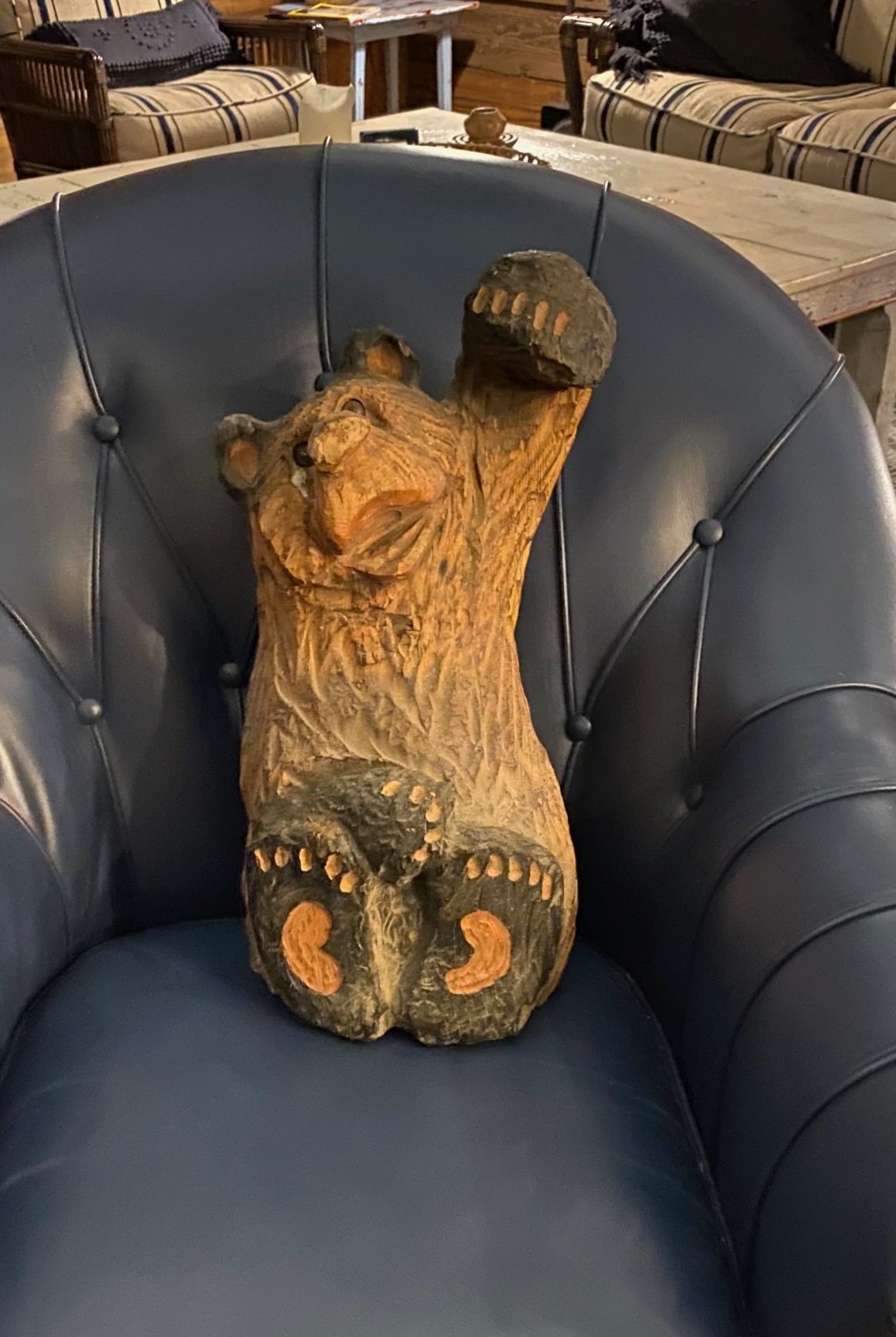
    But, as I said, the story that I’m going to tell is one of miraculous survival. We had a carved bear that sat on the Camp La Salle office porch for almost all of the time that I was director, I think I got it my second year. I’m pretty sure we got it from the guy who was in the barn next to Cressman’s who did chainsaw carvings. It was a bear, probably 18 inches tall, and it held a little sign that said “Welcome.”  It sat on a stump on the porch office for many, many years. The other side of the sign said, “Go Away!” and so you always know it was a bad day when somebody had switched it to “Go Away.”

    I hired my mom my first year up at camp to help me out by doing the cooking.  I about killed her, all my siblings about disowned me–she was working 16 hour days! People loved her cooking, but it was a lot of work for my mom. So, shortly after that, we got a new chef, Betty who became our chef all the way through, and my mom became the office manager. She worked in that office for 22 years, doing reservations, doing housing, taking care of stuff during the winter and that bear was always a part of it. We had lost and found sunglasses– that bear wore those sunglasses for quite a while and then one of the kids came up and said “Hey, those look like mine that I lost a couple years ago” so the bear ended up with a pair of dollar store sunglasses after that.

    People kind of loved the bear. It greeted families that were returning every year to camp– people would be talking about the bears as they were checking in. Kids would be playing with the bear and switching the sign around, changing the glasses –all that stuff.

    When the Creek Fire happened we didn’t know what happened to the camp, just as most of the people up here did not know what happened with their cabins.  I had been following things from Tucson– I listened to radio communications straight for almost 90 hours. I was the one who was basically posting on Facebook and posting in different places for HLVFD. The HLVFD guys lost all cell coverage at the lake. The only time I’d get information from them was when they went down and were able to get cell coverage off a point near Shaver. So that was the only information I was getting that was “official.” That information painted a picture of a lot of devastation up here. I kept up with the postings from a distance.

    About three days after the main part of the fire came through, Captain Lisa Coleman, Chief Brother Chris Donnelly and firefighter Peter Allbright came up and walked every single tract–it took them two days to do it.   As they’re walking through the tracts they’ve got fire still burning, they’ve got smoke everywhere. They’re all in their gear, wearing wet bandanas and trying to keep smoke out. They were trying to get information for all the cabin owners because we had so little information coming out of there.  I’d been watching heat signatures and it looked like everything was gone. So they went through each day, came out each night,  got information to me and I was able to get some of that information out to others.

    On the second day that they were doing their survey, they came into camp through the back way off of Bear Paw. They could not come in the main route because there were so many trees down.  Me, being a distance away, could not even imagine the devastation that I saw about a week later. They said, “There are trees down on the road.” I said, “Just step over the trees, climb over the trees.” Well, the trees were piled up 12 feet high and more in a lot of places!  It was utter devastation, where the firenado (tornado of fire) went through and took out these massive trees. Some of the trees that went down had root wads that were 15 feet up in the air and there’d be an eight foot hole where that root wad had been.

    So they came in through the back way. Lisa had video going as she was coming in and everything was unrecognizable. They’re looking and they’re trying to figure out “What’s this? What’s that?”  It wasn’t til Lisa saw the chimney of the lodge that was still standing that she knew where she was. She says, and this is a quote from her video, “Oh my gosh, that’s the lodge.” As soon as she recognized that she was able to start placing the other buildings.

    They were walking along, still videotaping, and Lisa says, “Oh, there’s the office.”  She said something about my mom, Ann, at that point and commented on the loss and they continued walking. Then Peter stopped all of a sudden and said “Look!” Down in one of these eight foot tree wells where the tree had gone over there was the bear with a little singeing on it. What we think happened is that when the firenado came through that tree came down and the bear was blown into the hole where it was protected from the fire that then went through!

    As I said, when they were doing the survey there was still fire burning all around them, but there was the bear so Peter climbed down in and recovered the bear! It had a little bit of singeing on it, but he was able to save it. They carried it the rest of the day and got the bear out. They were able to get a complete survey and we were the first ones to kind of get information out to our people about whether their cabin was still standing, whether their cabin was damaged or whether their cabin was down. But they brought the bear back…. Lisa had it at her cabin for quite a while.

    This last summer was my mom’s 86th birthday. I brought the bear down from Huntington and gave it to her–it was Lisa’s suggestion. My whole family was there–camp had been a central part of our family for many, many years. I had it boxed up and wrapped. Mom opened it up and as soon as she saw it, she said “This is it. This is the bear” and she broke down in tears. So did a couple of my siblings.

    So the bear survives and the tradition continues. The bear is on the front porch of my family home and now greets people. When they found the bear, the “Go Away”/”Welcome” sign was gone but a new one has been made. It doesn’t have a “Go Away’” side anymore. It just says “Welcome.”  And so the bear has his new home and he miraculously survived the Creek Fire.

  • Supervisor Nathan Magsig

    Supervisor Nathan Magsig

    Supervisor Nathan Magsig | Fresno County

    9-6-22

    Leading up to the Creek Fire, the County of Fresno was concerned with the density and significant number of dead trees in Eastern Fresno county. In 2015, the Rim Fire burned over 150,000 acres near Hume Lake and the sense of urgency to thin the Forest was ever present. By 2019 there were over 25 million dead trees in Fresno County alone.

    On the evening of September 4th 2020, a fire was detected outside Camp Sierra and fire resources were dispatched. A few hours later this small fire grew forcing the evacuation of the camp and the community of Big Creek. The morning of September 5th, concerned residents began calling my cell phone wanting to know what was happening with the fire. I was able to provide information using Facebook Live videos so residents and concerned citizens could receive accurate and up to date reports.

    Because the fire had started on the Friday leading into Labor Day weekend, many news stations lacked adequate reporters to disseminate information that was “real time”. I decided to use the resources of my office to provide accurate and up to date information to those seeking information on the Creek Fire. The fire was growing so rapidly that it required 6-8 live updates daily.

    There was so much misinformation in the first 10 days, that, I was compelled to drive in areas where the fire was burning or it has passed through to show residents which properties had survived and which areas were destroyed by the fire.

    On one occasion I received messages that the town of Shaver had been destroyed. I drove through Shaver, live, to show that not only did the town survive, but most of the residential properties did too.

    A few days later I was with the Chief Mark Johnson of Cal Fire and were driving down Auberry Road. The fire had ravaged many of the residences just a few hours before our arrival that day. We stopped in front of one home while Facebook live was in progress. The house miraculously survived, however, there were several small fires actively burning around the home. After the fires around the home were extinguished, I immediately received a phone call from the homeowner. Just 2 hours before their call to me, they were told by others that their home was lost in the fire. They were totally surprised to learn that I was at their home and it had survived.

    For 3 1/2 months, my office provided regular updates not only on the fire but also on how the community was coming together to help rebuild.

    While the Creek Fire is the largest single disaster in the county’s history it also stands as one of the greatest periods of generosity where neighbors, churches, cities, and states provided money, housing, police, firefighters and food to those in need.

  • John Craycroft

    John Craycroft

    John Shaver Craycroft | Shaver Ranch, Pine Ridge

    8-25-22

    Shaver Ranch Memories

    October 2021

    The Shaver Ranch on Pine Ridge has been in the Shaver family for 100 years and was left in ashes by the Creek Fire one year ago. It is difficult to recognize.

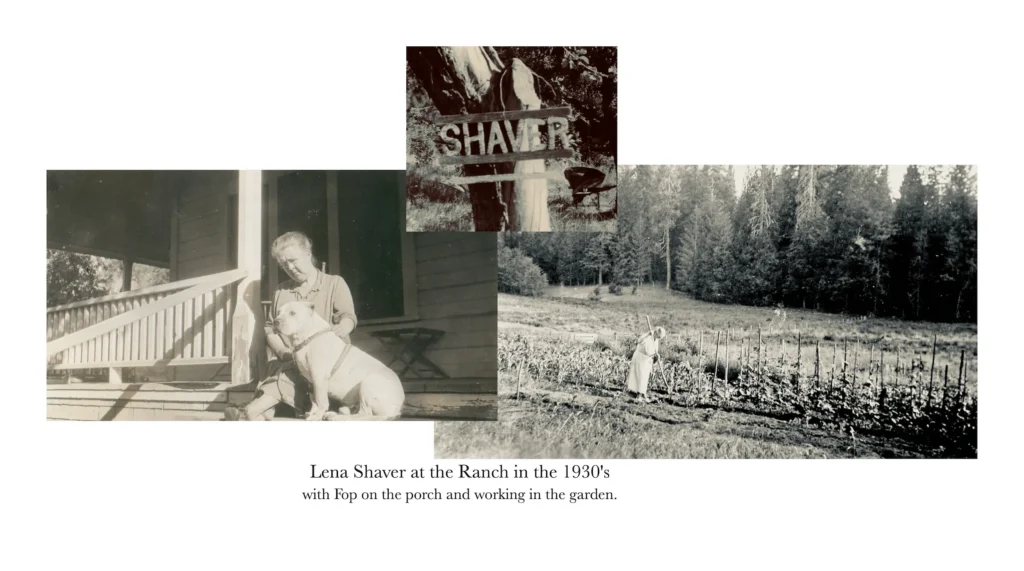
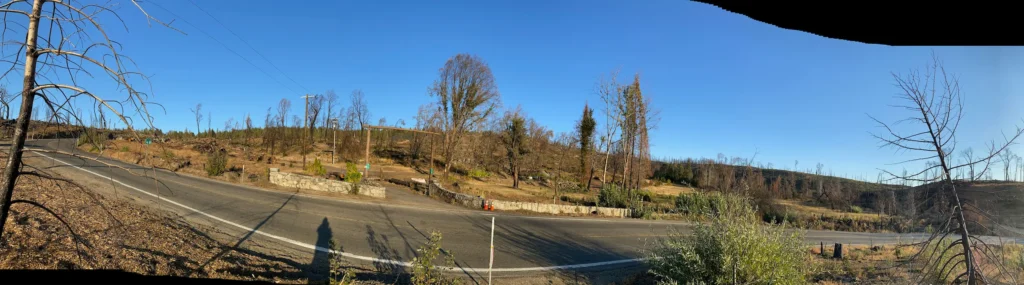
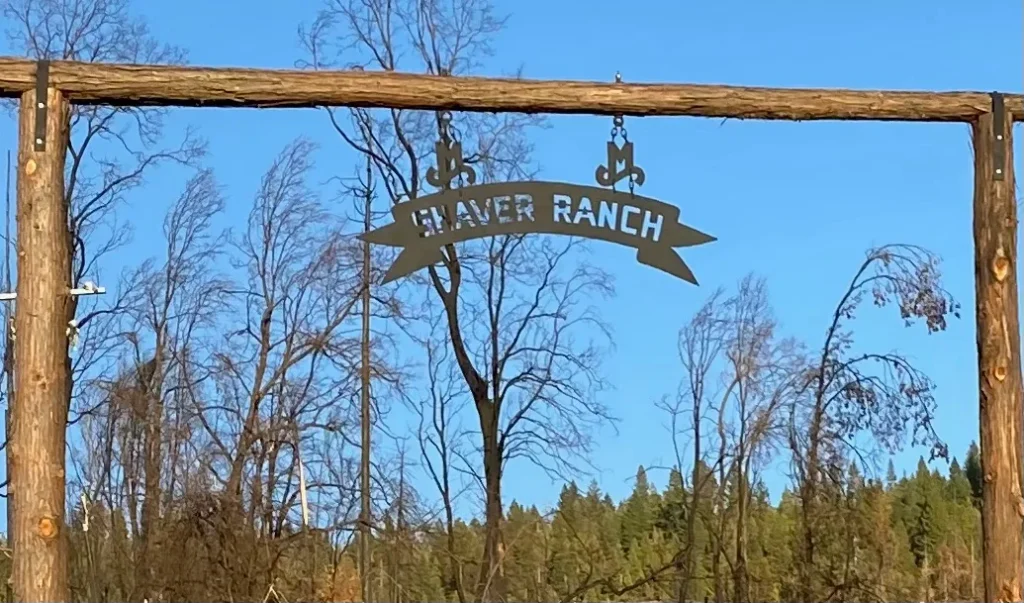
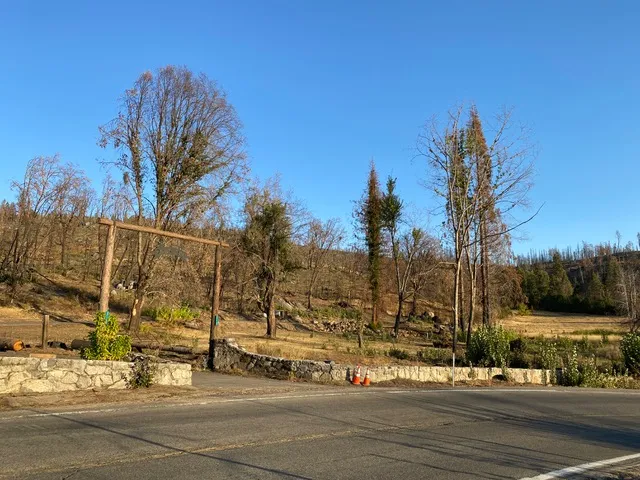
    The devastation has removed landmarks, but there is the creek and meadow, the familiar curve of the highway, the rock wall, and the Shaver Ranch sign at the entrance.

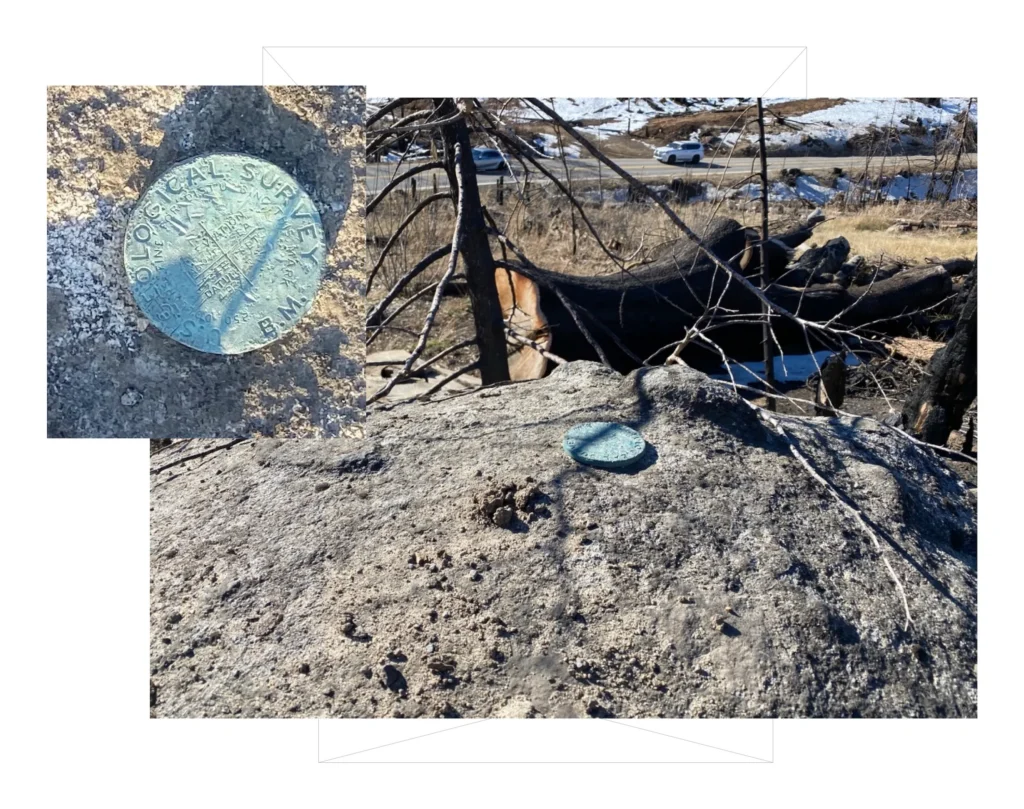
    Across the road, moving charred branches and debris, there is the tarnished brass benchmark embedded in the boulder: “4,938 feet above sea level”.

    Yes, this is the place.

    From this boulder, most of the ranch can be seen, and without the thick foliage of trees, the contours of the surrounding mountains are more visible than before the fire. This idyllic meadow on Jose Creek, formerly surrounded by pines and cedars, is set in a small hanging valley between the crest of Pine Ridge and the San Joaquin River Canyon. Just a few hundred yards below the meadow, the creek plunges 3,000 feet down the steep mountainside through Jose Basin to the San Joaquin River.

    Because of the steep terrain on both sides, this narrow shelf in the mountains was found to be the only practical route from the foothills to the high mountain basins of Shaver and Huntington Lake and the headwaters of the South Fork of the San Joaquin. The trail of the indigenous Mono Tribe went through this area, and the makers of the original wagon road followed their lead.

    In August 1966, my father, Charles Burr Craycroft (generally called Burr), a grandson of Lena and Charles Burr Shaver, was on his final trip to the Shaver Ranch, where he had spent much of his youth. He wore his usual mountain attire, a red plaid Pendleton shirt, and the black Stetson hat which he inherited from his uncle Harvey Swift.  Standing at the entrance to the ranch, he pointed out the rock with the benchmark across the road near the old barn. Walking over and lingering there in the shade of a Black Oak, he recounted “Grandma Shaver’s” stories of the early days in these mountains and how this came to be the Shaver Ranch.

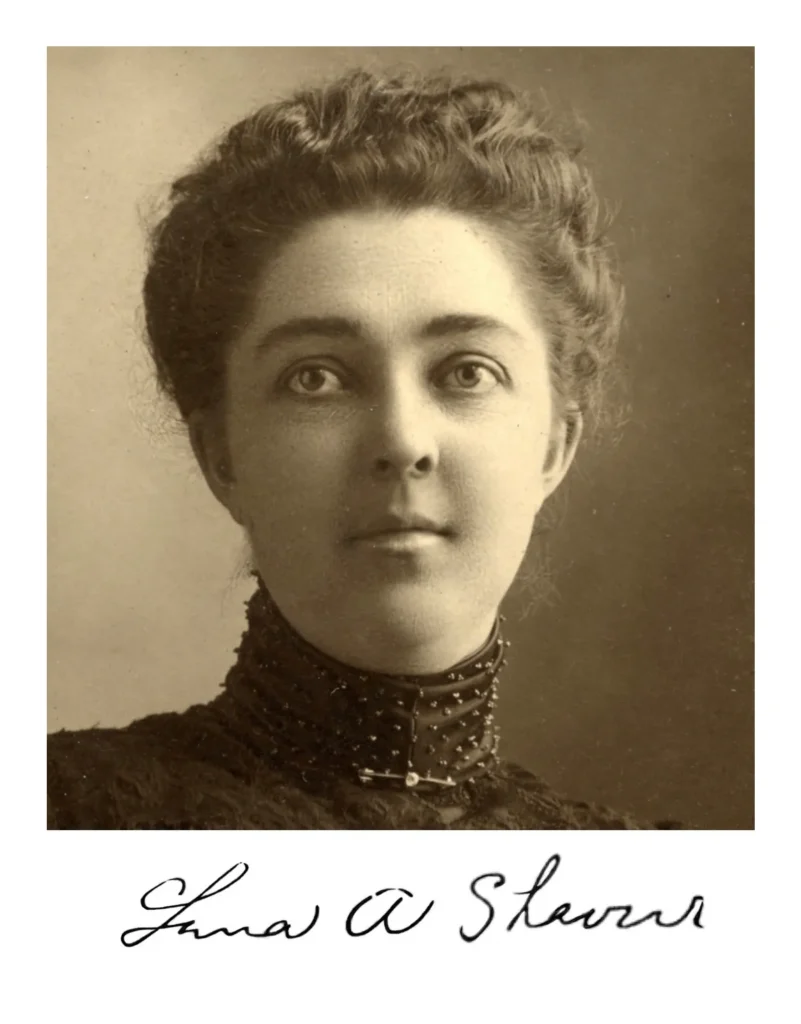
    Lena Shaver has not been mentioned a great deal in the history books. Yet, she was a remarkable individual who, as well as founding the Shaver Ranch, played an important role in the Fresno Flume and Irrigation Co. and the early development of the Pine Ridge & Shaver community. Strong and forthright, Lena had good business sense and was a close confidant and advisor to her husband. Her pragmatic nature balanced his idealism.

    Lena was 29 when she made her first trip up the Toll House Grade on a wagon led by oxen. It was July 4, 1893, Independence Day. She and her young daughters Grace and Ethel were on the last leg of the week-long trip from Michigan to reunite the family. Charles Burr (C.B.) Shaver had spent most of the previous two years with his partner Lewis P (L.P.) Swift here on Pine Ridge, as they supervised the construction of a new venture, The Fresno Flume and Irrigation Company.  The teamster driving Lena’s wagon surely would have stopped to rest and water the weary oxen at Kenyon’s store, which stood where the gate of Shaver Ranch is today. It was an oasis after the trip up the grade.  Little did Lena know that this would become her beloved mountain home one day.

    Though this was a big change from their comfortable life in Blanchard, Michigan, the scene here was likely reminiscent of Lena’s childhood. She was born in a small community called Cedar River in the woods of Pennsylvania. Like the Shavers and Swifts, Lena’s family, the Roberts were small family farmers who moved west to Michigan in the 1870s to try to take advantage of a lumber boom in the pine forests. Now the next generation was packing up and heading west again, a big move.

    The family settled into a cabin in the lumber camp, which would later turn into the town called Shaver. By the end of the season in 1893, the mill and flume were complete and ready to go into full production the next spring.  In Fresno, Lena practiced the intricacies of Victorian etiquette so they could properly entertain business associates and financial backers in the expected fashion of the day. Back at Shaver in the spring, the social life was more relaxed, with financial backers, management, crew, surveyors, engineers, and forest rangers often meeting on the cabin’s porch, on a granite boulder, or around a campfire.

    These were happy years for the family, and they welcomed their third daughter, Doris, in 1897.  By the turn of the century, the company was in full swing.

    Meanwhile down the road at Pine Ridge, the community was growing and becoming a tourist destination.  The Kenyon family’s store was prospering and a blacksmith shop, a small schoolhouse, and the Pine Ridge Post Office were added.  They needed more room for guests, so they built a “real” hotel, with the current Victorian style and finishes, not the typical rough mountain building. It had to be painted and have smooth siding, trim, and moldings with shingle roofing, not rough shakes.  These materials were not available in the mountains and would have to be brought up the grade from the valley, which was an expensive proposition. So Sam Jennings, the Kenyon’s son-in-law, rigged up machinery and used all local lumber to produce what they needed. In 1903 John Armstrong bought the operation and continued to run the store and hotel and they raised apples, pears, and cattle.

    The mill business continued to grow, but in 1901 LP Swift died suddenly of a heart attack, and his brother Harvey, who was married to Lena’s sister Minnie, came out from Michigan to take over his brother’s role. About this time, CB was diagnosed with a severe form of diabetes. He took measures to improve his diet and stopped smoking, and was able to continue his active lifestyle for a time. But he became ill in late 1907 and, with his immune system weakened by diabetes,  passed away on Christmas Day.  He was just 52 and Lena 43. With CB’s untimely death, Lena became a director of the company. She worked closely with her brother-in-law Harvey Swift, who assumed C.B.’s role as president, along with Arthur Long, the vice president, and Charles Musick, secretary.  Together, they managed the business through some of its most productive years until they sold the company in 1912.

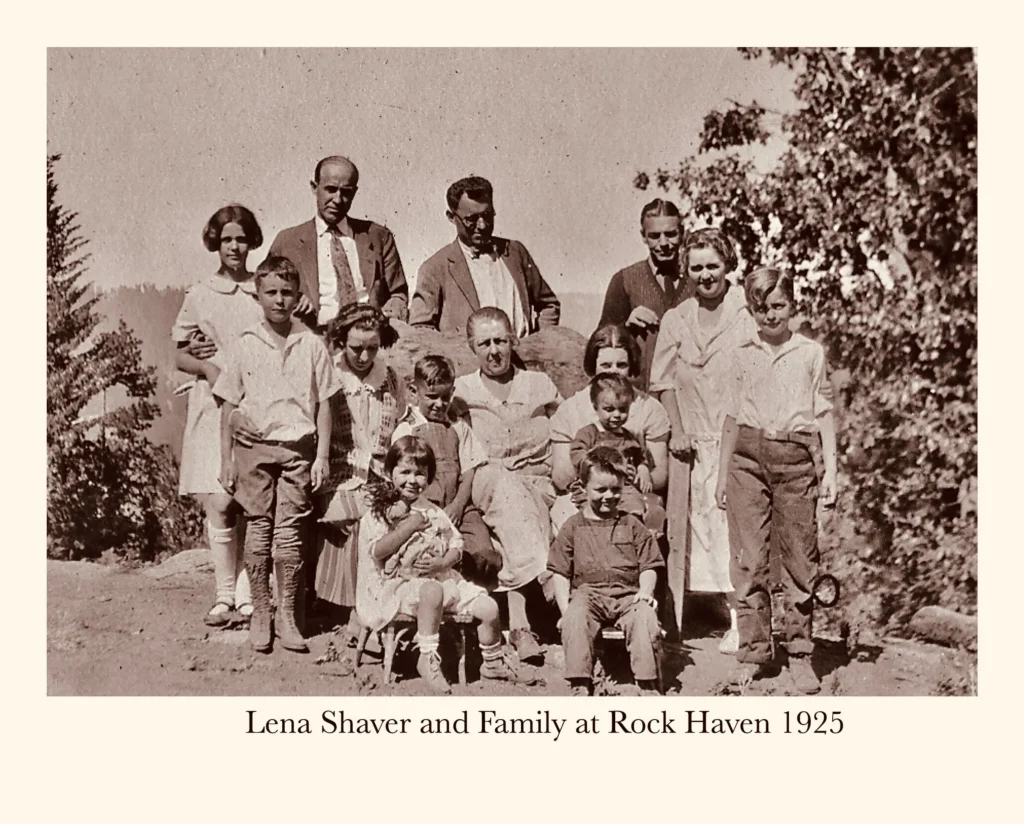
    Lena then embarked on a new career in real estate development and carried out one of C.B.’s unfulfilled dreams. She purchased a lot in downtown Fresno on the corner of Fulton and Merced Streets and built the Shaver Building, leasing the ground floor to retail stores and the second to the Sierra Hotel. And then Lena and her son-in-law, Dr. Harry Craycroft, purchased 160 acres on the slopes of Stevenson Mountain and created the development they named Rock Haven. The name was a play on words of one of the towns from her childhood, Lock Haven, Pennsylvania. Lena then negotiated with the Edison Company to have the company dismantle her cabin piece by piece and rebuild it at Rock Haven.

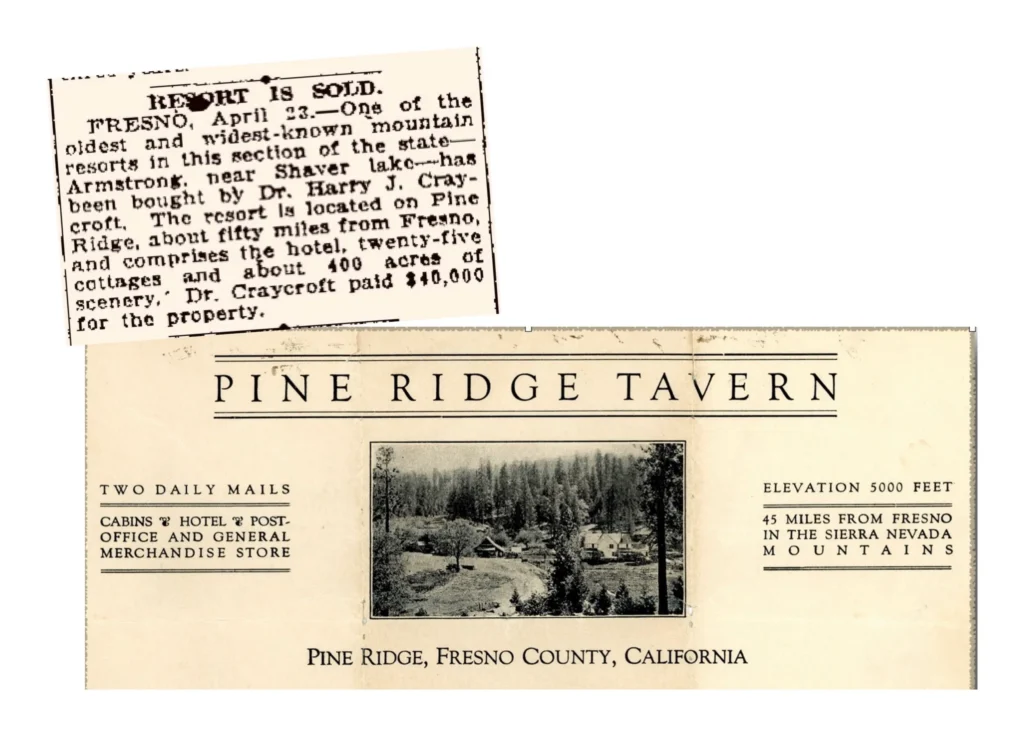
    The idea of the Shaver Ranch was born in 1921 when Lena and Harry purchased the Armstrong’s Resort as an investment, and operated as the Pine Ridge Tavern. The business was very popular in the “Roaring 20’s”, attracting people from far and wide. The rooms in the hotel were $4/day, cabins $21/week and there were 40 acres of campgrounds and camping was free!  Unfortunately, in 1930 with the start of the Great Depression, the tourist business slowed to a trickle and they were forced to close the hotel.

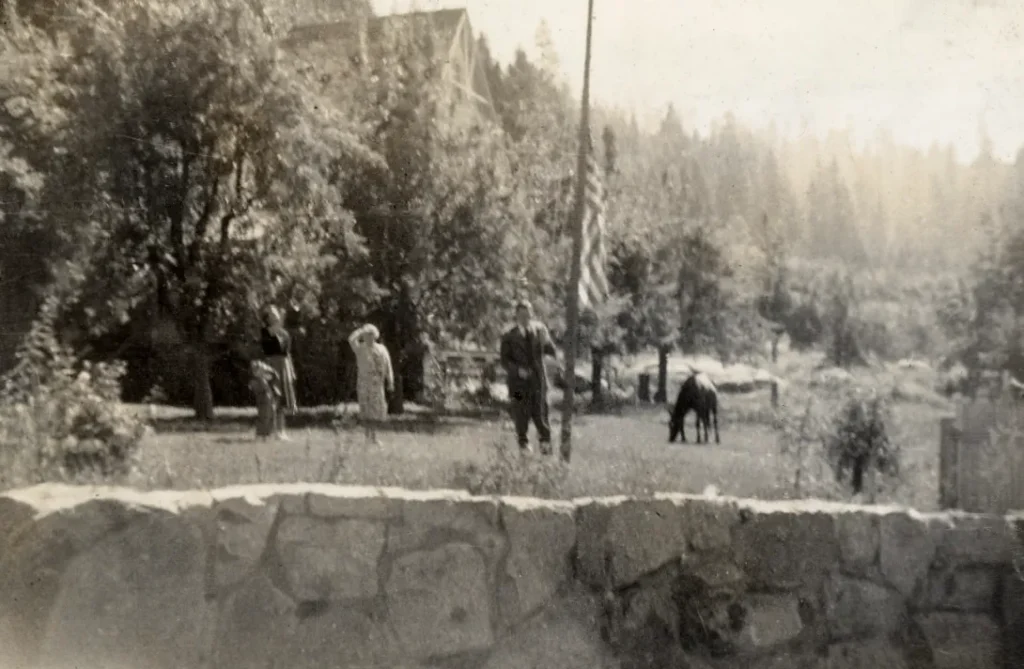
    They stopped taking in guests and the property became the family ranch and the old hotel became their mountain home. Lena had loved her cabin at Rock Haven, but she enjoyed the comings and goings of travelers and running the store and post office until the building burned in the mid ’30s.  And here there was plenty of room for the entire growing family and Lena’s sister, Minnie Swift, built her own cabin on the slope above the home. They all spent many happy times here. The family took part in the work around the ranch during summers and weekends. There was always plenty to do, tending to the horses, gathering firewood, clearing dead trees, planting new ones, building, mending fences, and checking on the finicky spring box. It was a magical place, full of artifacts and memories.

    In Lena’s later years, Burr arranged for a young woman from Kingsburg named Adeline Nord to be his grandmother’s companion during the summer in the mountains. Adeline became a close family friend and later would glow as she recounted her times with “Mrs. Shaver,” driving her about, listening to her stories, and learning about the mountains. That summer, Lena passed a torch to Adeline, who herself became a mountain legend. Adeline would later marry Karl Smith and purchase and run the Diamond D Ranch at Blaney Meadows, above Florence Lake, now called Muir Trail Ranch. In the winters, she taught school in Auberry and returned to the ranch each summer, running the operation with her daughter and granddaughter for many years after Karl’s passing.

    Though Lena had always hoped to spend her final days at her mountain home, to her great sorrow, the doctors advised against her going to a higher elevation. She died peacefully at her home in Fresno in May 1939, a week after her 75th birthday.

    In establishing the Shaver Ranch, a place was established where the entire family—Lena’s three daughters, seven grandchildren, and sixteen great-grandchildren—could gather, call home when far away, and return as often as needed.  And this legacy continues to provide inspiration for the following generations.

    In 1963, the grand old house caught fire, likely due to an aging electrical system, and the old dry wood quickly burned to the ground. A collection of antiques and historical memorabilia worthy of a museum was lost. Fortunately, some photos and documents had been distributed for safekeeping or copied through the years. Douglas McDonald, son of Lena and CB’s daughter Doris, replaced the old home with a fine new one of his own, a mountain lodge.

    Now, this home has been taken by the Creek Fire, along with many others and thousands of acres of forest. Despite the land being laid bare, there is something of the spirit of those who came before here, evoking their dreams and accomplishments. And at the top of the meadow, a group of trees survives. Others, partially blackened, are leafing out along with many shrubs. It will take time, a long time. But it will grow back.

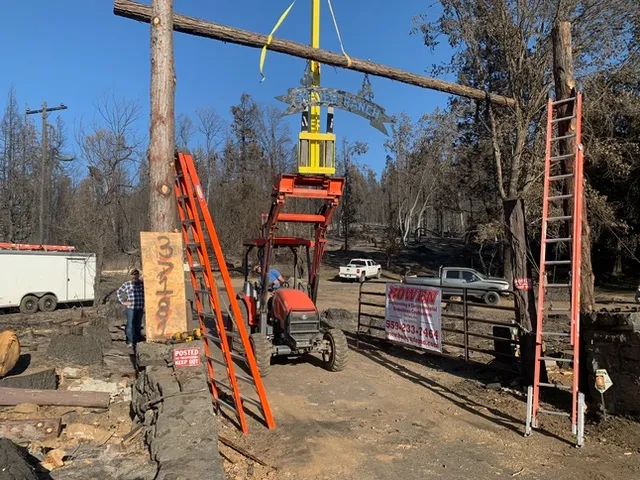
    Steven McDonald, son of Douglas, and his family have put the Shaver Ranch sign back in place above the entrance gate, standing proud. A welcome sight after the shock of seeing it on national news, hanging there in the wake of the Creek Fire. The difficult tasks of cleanup and erosion control are underway. Seedlings are being planted. Plans are being drawn. The first steps.

    John Shaver Craycroft

  • Donna Baker Martin, Ed.D.

    Donna Baker Martin, Ed.D.

    Donna Baker Martin, Ed.D. | Ockenden Ranch, Shaver Lake

    6-8-22

    June 8, 2022:

    It has been a year and a half since the Creek Fire started and I did not want to write my story. I avoided it because it meant it was real. I encouraged others to write their stories since I was part of the Storytelling Group but just hadn’t gotten around to writing mine. It was not until I read Tori Goss’s story that I decided to write. I had no idea what it was really like. I was reminded by a survivor recently that I was the one who encouraged him to write. He said it was hard to put pen to paper and kept waking up in the middle of the night. He finally wrote his story describing his loss. Now it’s my turn.

    Friday September 4, 2020

    It was Friday of Labor Day weekend, and I was looking forward to a small gathering at the Isaacs’ cabin on Cold Springs in Ockenden. My husband, Louie, and I were expecting our daughter Kirsten and her son for the weekend, but they were not expected until later, so we were happy to visit with friends that night. The cabin was just above Highway 168 and as dusk came, we heard several sirens in the distance and thought, “Oh no, hope there was not an accident at the lake.” This was a familiar sound in the summer. A forest fire was the last thing that occurred to us. At end of the evening, we headed home to wait for Kirsten and Lukijah who arrived a little later that evening.

    Saturday, September 5, 2020

    At 5:00 am, we got a call from friend and neighbor Bobby Coburn who had gone to town because there was falling ash and he wanted to see what was going on. He learned Big Creek was being evacuated. About that time, Kirsten woke up telling us it smells like smoke, and she would know because she evacuated during a fire near Weaverville a couple of years ago. She knew the smell. We did not panic because we knew there had been several small fires that were quickly put out over the years, and we thought it would be just fine.

    At 5:30 AM, Deanna Coburn (Bobby’s wife) banged on the door, “We need to go, there is fire and we need to leave.” She was quite emphatic then she went next door to alert the Ballenger’s. Again, we did not panic though we decided to leave the house as soon as possible. We packed a weekend bag, thinking we would come home in a couple of days. Then, I gathered the food I just bought for the weekend, and we headed to the Ballenger’s house in Fresno to wait. It was 7:30 AM.

    For the next several days we talked about “what ifs” and what would we do. Do we have a house? What if it was all gone? What then? We filled our days trying to learn more. Where is the fire now? Are our friends safe? What was the latest update?

    Bobby and Deana’s son works for Edison, and we got updates from time to time. On Monday we learned our neighborhood was spared. A quick video showed our house still standing and I was stunned that our deck umbrella was wide open. Funny how something like a simple umbrella was a symbol of hope and calmed me. For the next three weeks, we passed the time visiting family and friends, and it was so comforting to just do something normal like watching grandchildren play.

    When we were notified that we could go home September 25, we were in Visalia with friends, so we headed up the mountain in two cars with Louie a little ahead of me. I thought I was ready for the devastation I was about to see because I had seen it on the news and internet. First, there was the char and burned trees. I was ok. Then I saw Cressman’s, and I was ok. Fire trucks were going up and down the highway. As I drove on, I looked up the hill for the familiar houses I saw every time I went up to Shaver: all I could see were chimneys. That’s when it hit me and I started crying. As I drove on, I looked for the house right by the road and saw only a chimney. I could not stop the tears.

    I continued to drive up until I got to my neighborhood. I had seen on the news about the heroic neighbors and firefighters who saved Ockenden (see Tori Goss’ story), so I drove onto Cold Springs Road to see for myself. That’s when I saw a fire truck “Fresno County Fire Engine 86” and lost it again. I thanked the fire fighter through my tears then I went home hugged my husband and counted my blessings.